This year, 2025, Hawaiʻi’s first deep-sea voyaging canoe in over 600 years celebrates its 50th anniversary, a momentous time in Hawaiʻi history. Hōkūleʻaʻs maiden voyage in 1976 reclaimed the ancestral pathways of our Oceanic Peoples and reconnected us through voyaging traditions, proving that our ancestors purposefully navigated the Pacific Ocean and resetting the understanding that the ocean connects us.
Since Hōkūleʻaʻs initial launch until today, eight large deep-sea waʻa (voyaging canoes) have been born in Hawaiʻi, and many more throughout the Pacific. These waʻa have sailed throughout the vast Pacific and around the world. However, even as the voyaging traditions were revived, we still primarily provisioned the canoes with modern canned and dry foods procured from big box stores.
In 2018 and 2019, Nā Kālai Waʻa, the ʻohana (family) of the voyaging canoe Makaliʻi embarked on a new voyage, one that would change the direction of our organization, our families, and our communities. It set us on a path that aligned with the values and vision of our ancestors while restoring the ʻono (taste) and the ola (healing) of our foods. This voyage was named Hanaunaola, A Generation of Life.
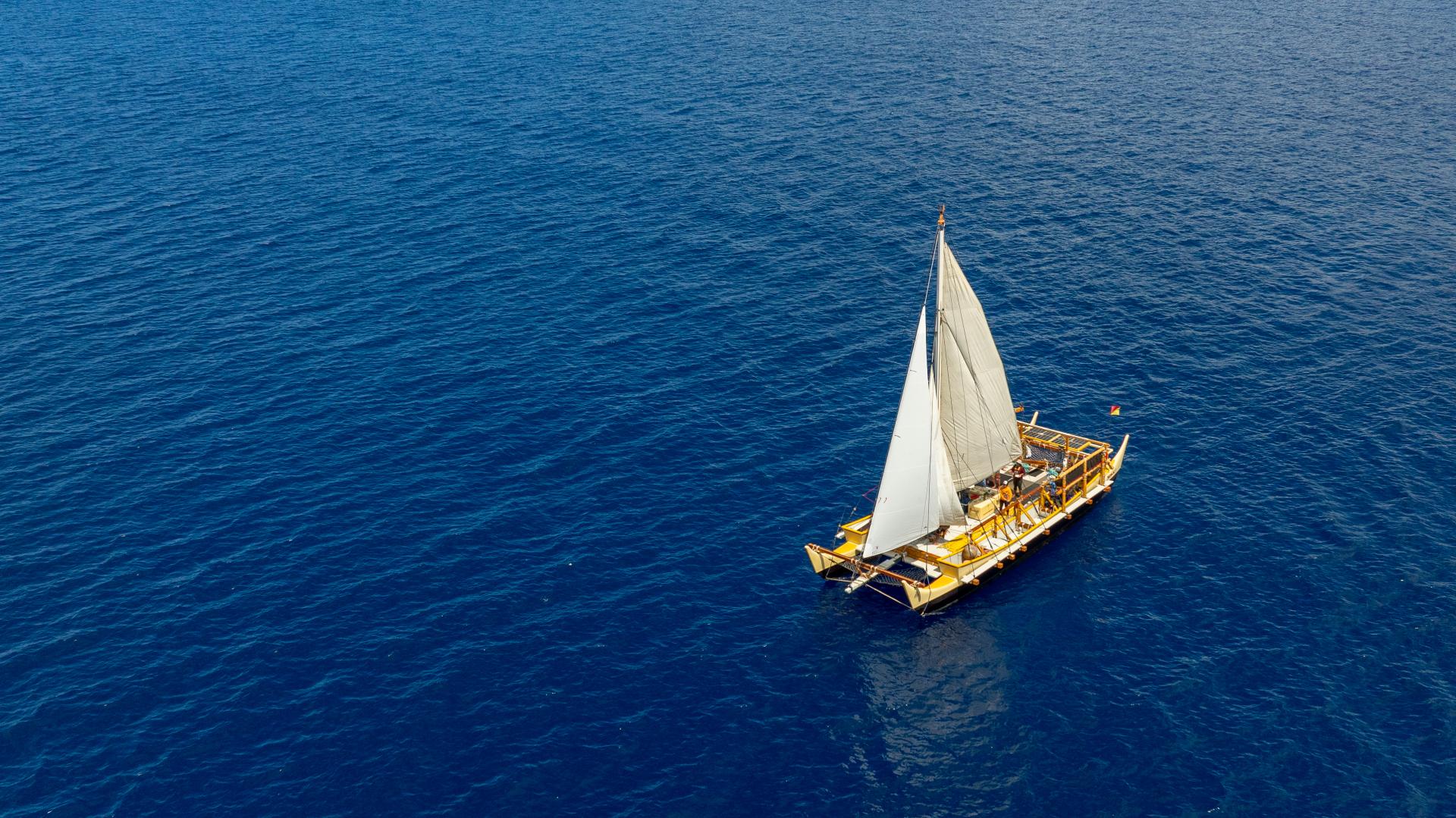
Makali’i with new rig. Photo by Na’alehu Anthony.
We set out to take on a 30-day voyage to Mokumanamana, provisioned only by what we could grow and preserve on our island: a feat that had not been attempted in hundreds of years. Our kahua (foundation) stayed true to our Captain and founder, the late beloved Clay Bertlemann, who taught us, “He waʻa he moku, He moku he waʻa” (Our canoe is our island, our island is our canoe). On the canoe, we are interdependent, relying on one another to fulfill our responsibilities and utilizing our skills as we work together as one. On the canoe, we are our island, and if we can bring the practice of the canoe to our families, our work, our community, and our island, the island itself becomes our canoe.
Our Captain and Pwo (Master) Navigator Chadd ʻŌnohi Paishon initiated a kāhea (call) to our communities to join in this effort, stating that if we can do this together, it says something about our community, but if we cannot, it says even more—and our communities stepped up. Ten organizations and a large number of individuals were willing to grow and preserve, reviving old techniques while incorporating new technologies. They became our expanded ʻāina (land) crew. When asked what they should grow, our Captain replied, “Grow what your ʻāina allows you to grow and what sustains your families, and share the excess with us. We will provision from what your ʻāina provides.”
And with that, the journey started. Over the preceding year, crops were grown, preservation techniques were refined, the community united, and food was produced. As a result, the canoe was provisioned, the crews were nourished, and the voyage was a success in many ways. The crew posted online at each meal where the food came from and which communities fed the canoe. Waste and trash were reduced to a minimum, and the crew members had all the energy and strength needed to be successful, even returning in better health than when they left. This voyage was a testimony that ʻike kūpuna (ancestral knowledge and worldviews) hold the keys to health, happiness, and the thriving of our culture and our people in this modern day and age.
As the voyage came to a close, a new storm of unnatural proportions crept towards us on the horizon, posing not just a threat to our canoe family, but one that would endanger Island Earth: the COVID-19 pandemic. As an island nation that was once self-sufficient but now relies on imports for over 90% of its food and provisions, the pandemic severely impacted our food security, especially in the most vulnerable and remote areas.
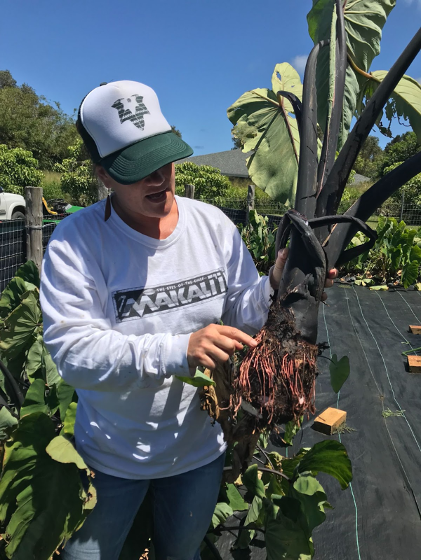
Leiohu Colburn preparing kalo for a Hanauna Ola voyage.
On a waʻa voyage, we “make ready” months and years in advance, so the preparation for the Hanaunaola voyage had prepared us to weather this storm. The same organizations and individuals, our land crew, who fed the canoe, now stepped up in big ways to feed our communities. They became distribution hubs, taking in donations of fresh produce and protein from farmers and hunters, preserving and distributing them to our communities, and sustaining our people. The Hanaunaola voyage was more than just provisioning a voyage—it was a return to a lifestyle that reflects the worldview and practices of our ancestors. The pandemic drove home the need for food sovereignty now more than ever.
Not long after we began to recover from the pandemic, tragedy struck in the devastating Lāhaina wildfire on August 8, 2023, which claimed over 100 lives and destroyed or damaged over 2,200 structures. The Hanaunaola crew had been scheduled to teach the food preservation system to voyaging and community members on Maui the weekend after the fires. Out of respect and concern, they decided to postpone their class, but the people of Maui said, “No, please come, please share.” The beauty that was realized in the timing was humbling. Equipped with this new knowledge, the community began to preserve and distribute shelf-stable native food such as lūʻau (cooked taro leaves) and iʻa (fish) to families that did not have electricity or were housed in shelters and homes of family and friends. It was not only healthy food but healing food, healing to the spirit and souls of those in need. It fed hope.
After these experiences, we desired to share this ʻike (knowledge) with our ʻohana across Moananuiākea (the great, expansive ocean). This opportunity came in June 2024 with the 13th Festival of Pacific Arts & Culture, held that year in Hawaiʻi, featuring the poignant theme of “Ho’oulu Lāhui: Regenerating Oceania.” As part of the festivals, voyaging canoes from across the Hawaiian islands, the South Pacific, and Micronesia arrived at our shores in Kualoa, Oʻahu.
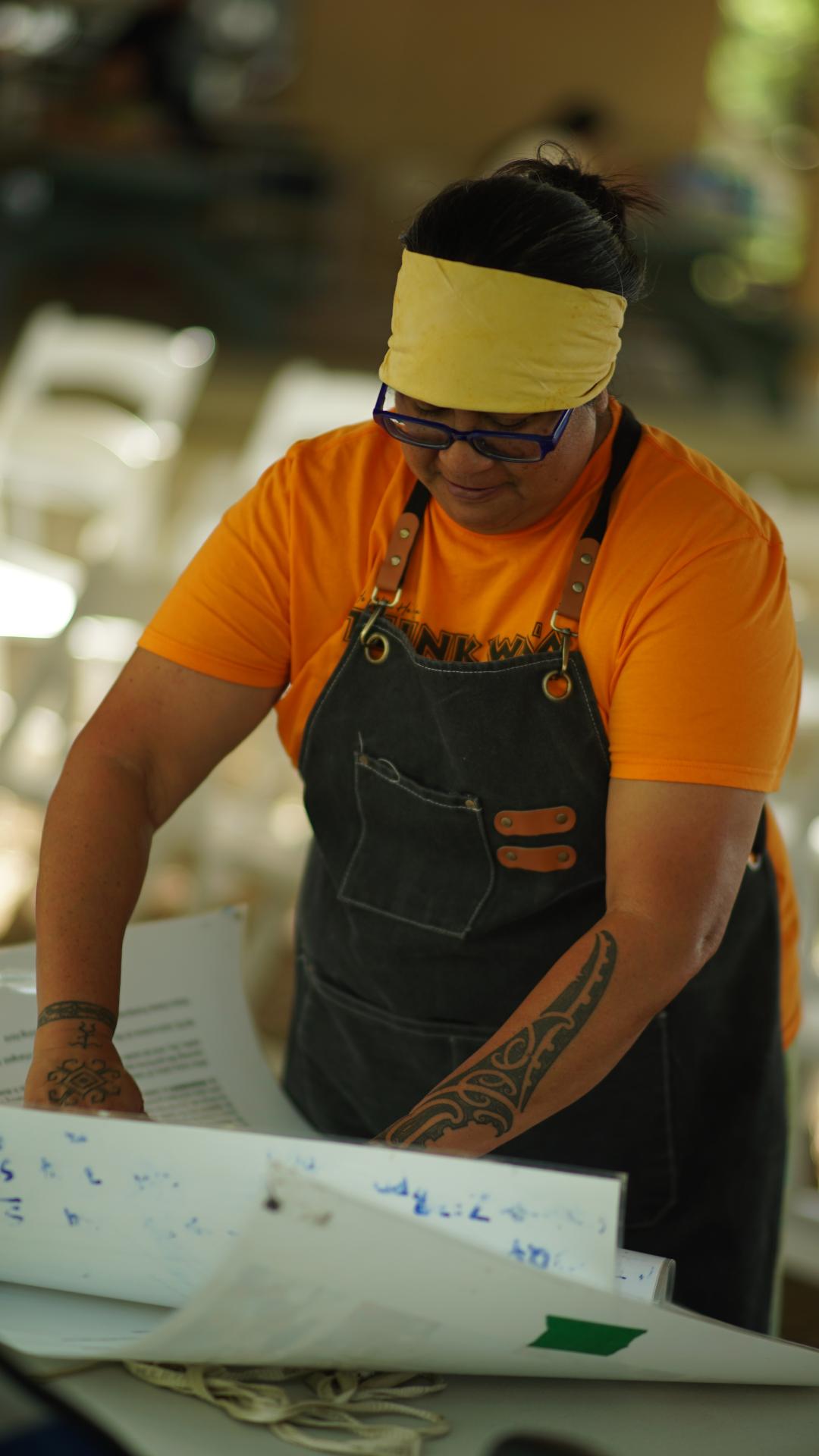
Keala Kahuanui, Hanauna Mau Program Lead at Pacific Arts Festival 2024.
As the host nation, we established a Waʻa Village to host our oceanic families and share the lessons we had learned on combining ancient traditions with modern techniques to make our own food from the ʻāina, the best choice for voyages. When our Oceanic family left our shores at the conclusion of the festival, they left with knowledge, canoes stocked with sustainable foods, and the desire to prioritize food from their lands for future voyages. As of the writing of this article, there are several waʻa sailing between Nations provisioned by the food grown and preserved in their communities.
We shared our learnings with those on the ancestral routes of our Peoples, sailing our canoes around the world just a decade ago, traversing the globe. How do we share our learnings with the larger Island Earth? Well, our kūpuna (ancestors) tend to open the pathways when we most need them if we are receptive. Through the support of Tamalpais Trust, a Native-led philanthropic organization, we were able to take a small team to share our food and experiences at Terra Madre, the international biennial convening of food producers in Turin, Italy, in the fall of 2024. There, we were humbled to share our story, and more importantly, share food that we preserved in Hawaiʻi and transported to Italy: a physical manifestation of Ea i ka ʻAi, or sovereignty through our foods.
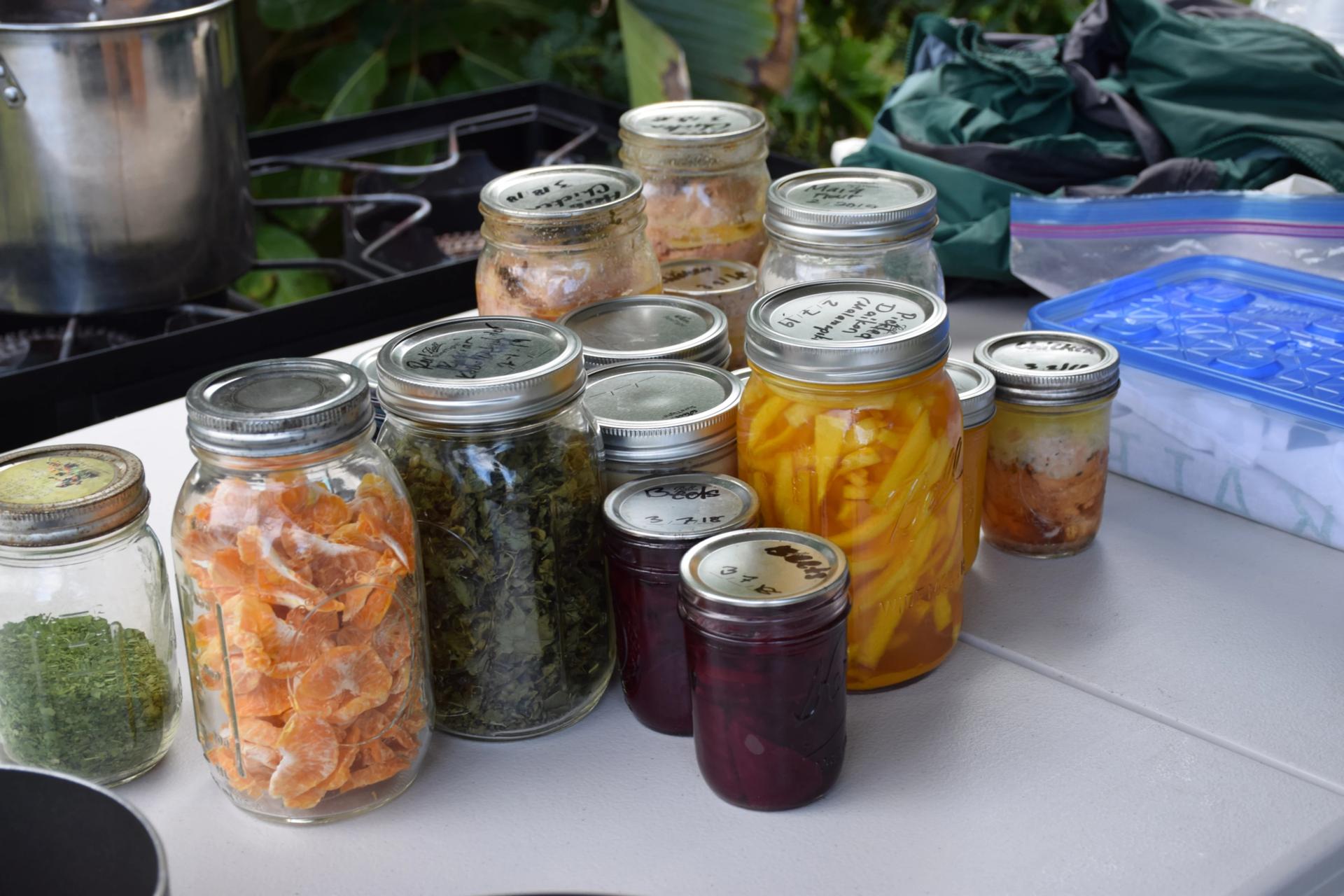
Food Provisions for Hanauna Ola Voyage.
To bring this voyage of food full circle, we were humbled to provision food for Hōkūleʻa as it sailed from Hawaiʻi to circumnavigate the Pacific during itʻs 50th year of voyaging. The Hanaunaola Voyage and itʻs extended reach truly exemplifies the vision of Uncle Clay, sharing these important lessons around the world. He wa‘a he moku, He moku he wa‘a. Our canoe is the island, and our island is Island Earth.
To learn more about Nā Kālai Waʻa and the Hanaunaola Voyage, visit nakalaiwaa.org.
To read this story in the original ʻŌlelo Hawaʻi, go here.
Kaimana Barcarse (KANAKA HAWAI’I) is CS BOARD CHAIR.
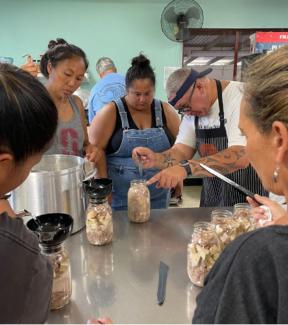
Top photo: Chadd ‘Onohi Paishon with Hui O Wa’a Kaulua Crew after the Lahaina fire, preparing food.
Photos by Nā Kālai Wa’a.