By Brandi Morin (Cree/Iroquois)
Photos by Julien Defourny
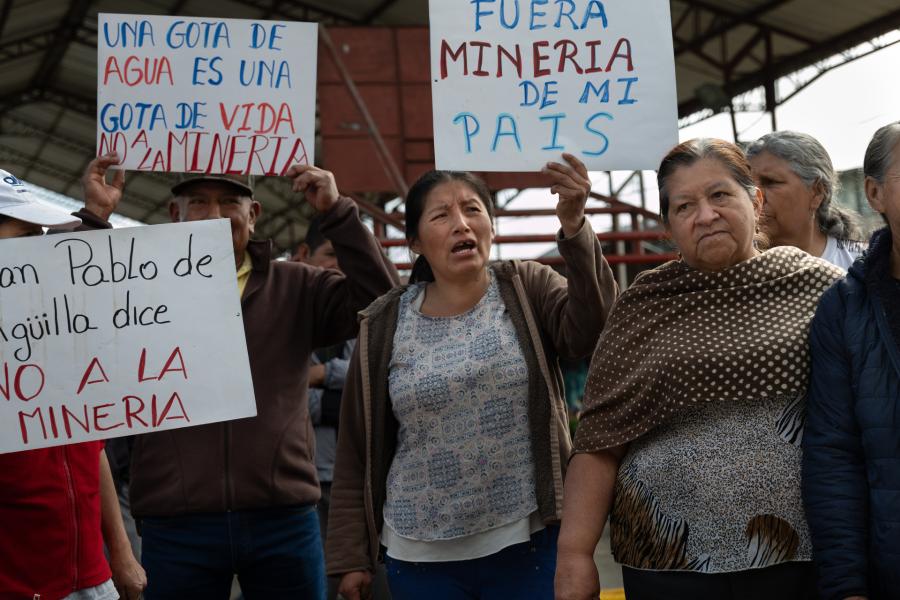
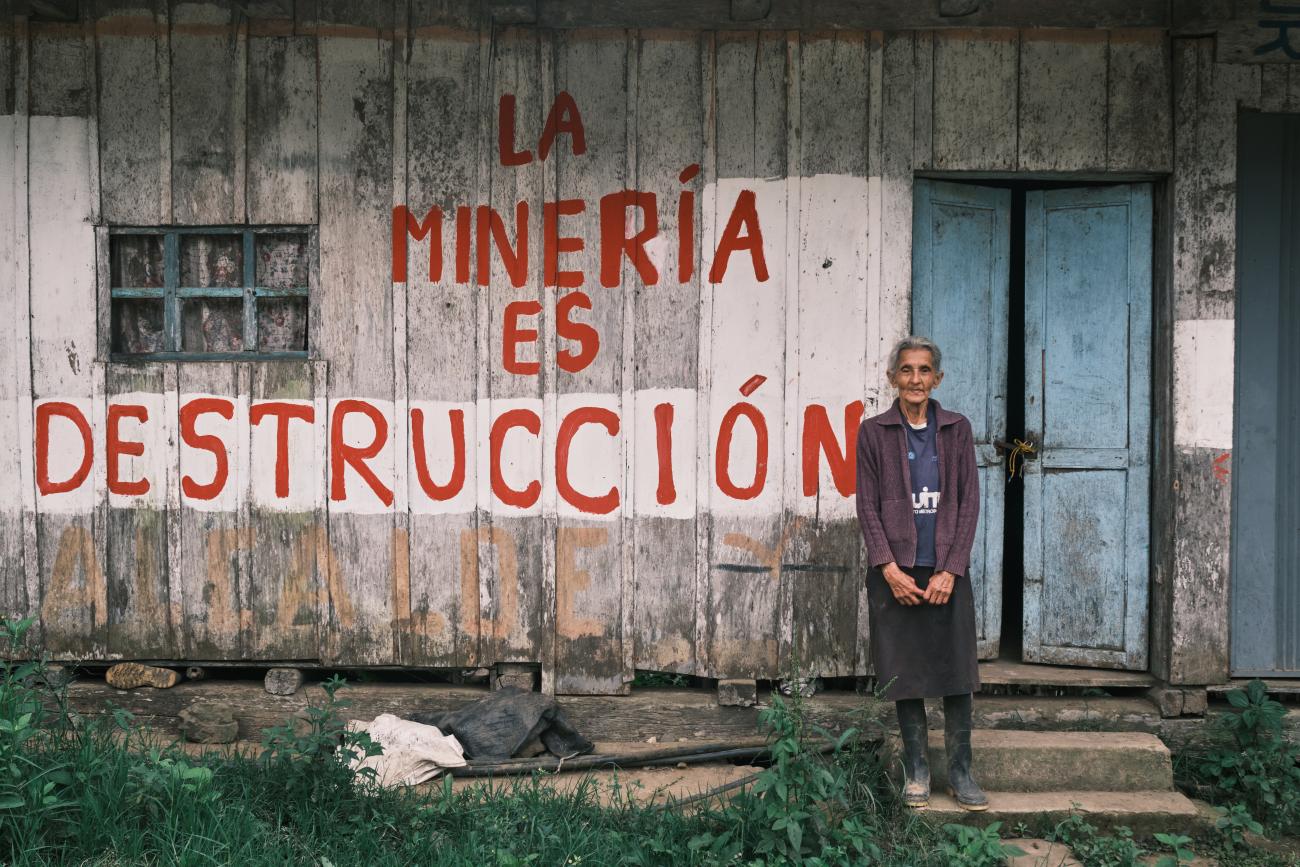
LAS PAMPAS, Ecuador — From a hillside perch at the local Catholic church, Juan Carlos Carvajal Silva surveys the village he's fighting to protect. The 1,800 residents of this remote community go about their daily lives as the Andes rise dramatically above against the sky. At 38, Carvajal sits with a calm resolve, as if he has made peace with the risks he faces. As president of the Collective Defenders of Water and Life, he leads the resistance against a Canadian mining project—a role that has transformed him into an accused terrorist facing 30 years in prison. His alleged crime is defending his land from a Vancouver, Canada-based mining company.
A series of new mines is set to begin operations in the lush mountain ranges of Ecuador's northern Cotopaxi province. Canadian company Atico Mining is in the exploratory phases of launching its La Plata project, promising that economic prosperity will accompany the extraction. The project, valued at $91 million, aims to extract copper, gold, silver, and zinc from beneath the soil. Every day, approximately 850 metric tonnes of rock will be excavated—equivalent to the weight of 425 cars—in an operation expected to run for 8 years.
These minerals, copper in particular, are driving a global rush justified by the language of “climate solutions.” The world needs copper for electric vehicles, solar panels, and wind turbines. The so-called green transition has become the latest justification for extractive industries to plunder Indigenous territories, repeating a centuries-old pattern where profit takes precedence over the rights and lives of those who have stewarded these lands for generations.
While the company has explored only 1.6 percent of its land holdings, suggesting the potential for significant expansion, locals are rallying against Atico's state-backed operation due to concerns about the project's environmental footprint. Ecuador's government and military have responded swiftly to quell dissent, resulting in violent clashes and a wave of criminal charges that have transformed community defenders into alleged terrorists.
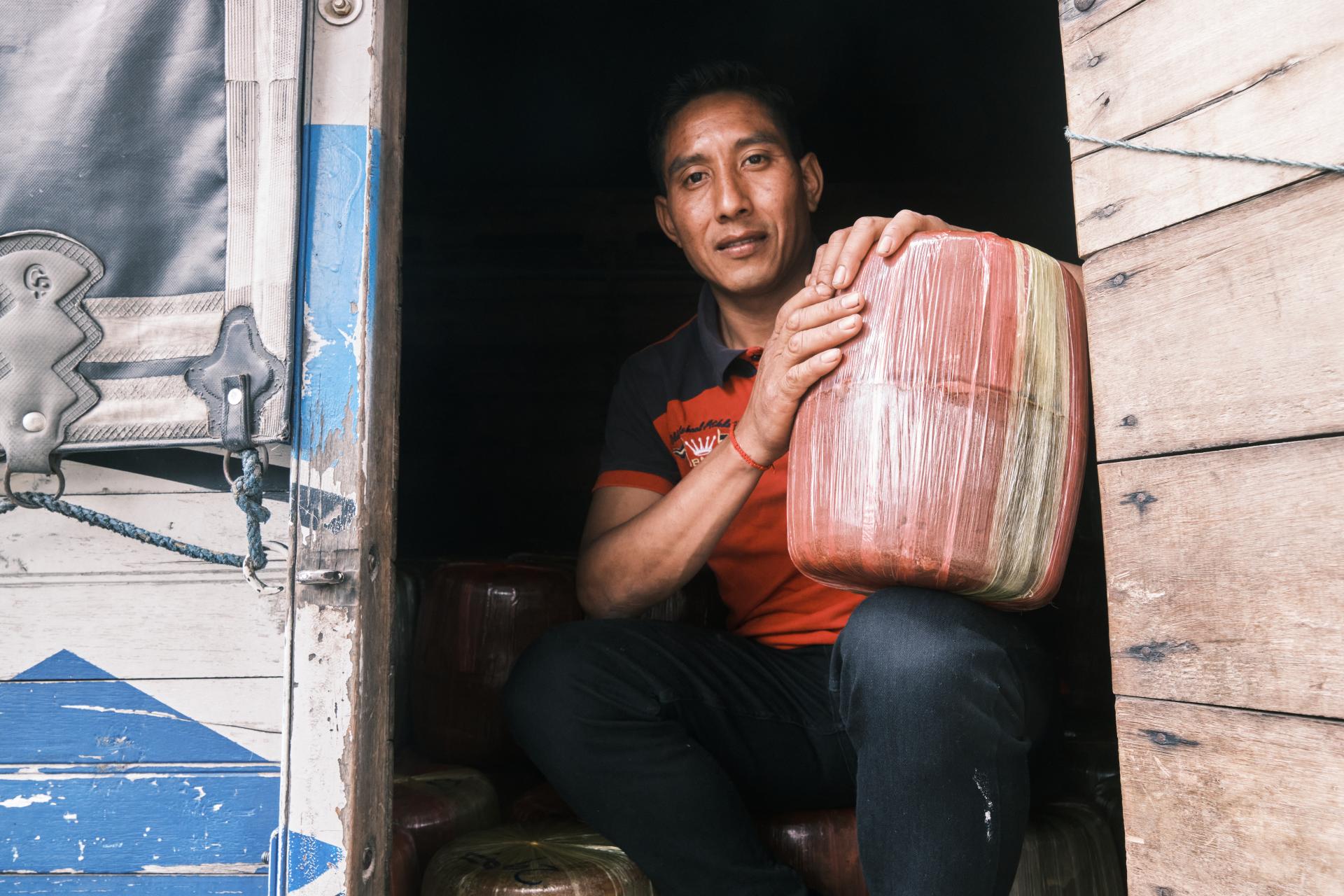
Carvajal currently faces 12 separate legal charges. The two most serious—terrorism and organized crime—carry a combined sentence of up to 30 years under Ecuador's current conservative government, a dramatic increase from the 12-year maximum under previous administrations. "They want to silence him," his translator says. "But he's not afraid, because he's a simple person defending his land."
Carvajal is far from alone; he says 115 people in the region now face criminal charges for defending their territory. While none have been sentenced yet, many are caught in lengthy legal processes requiring repeated court appearances and testimony. The charges include not only terrorism and organized crime, but also sabotage and damage to private property. "Under a legal [framework], everything is debatable. I know this, and I'm secure to appeal these charges," Carvajal says. He pauses, gazing out over the village where farmers work their sugar cane fields as they have for generations. "I'm defending my land, and I feel the confidence to continue doing it."
The threats extend beyond the courtroom. In 2021, Carvajal was kidnapped. Since then, he has received numerous death threats. Most recently, during a government-sponsored environmental consultation in August, he says he received direct phone calls warning, "We will get you if you continue talking against us." Even more disturbing, Carvajal alleges that a state official offered him money to silence him. "The governor said directly, 'I will pay you,'" he recounts. Despite having several organizations supporting his legal defense, the pressure continues to mount.
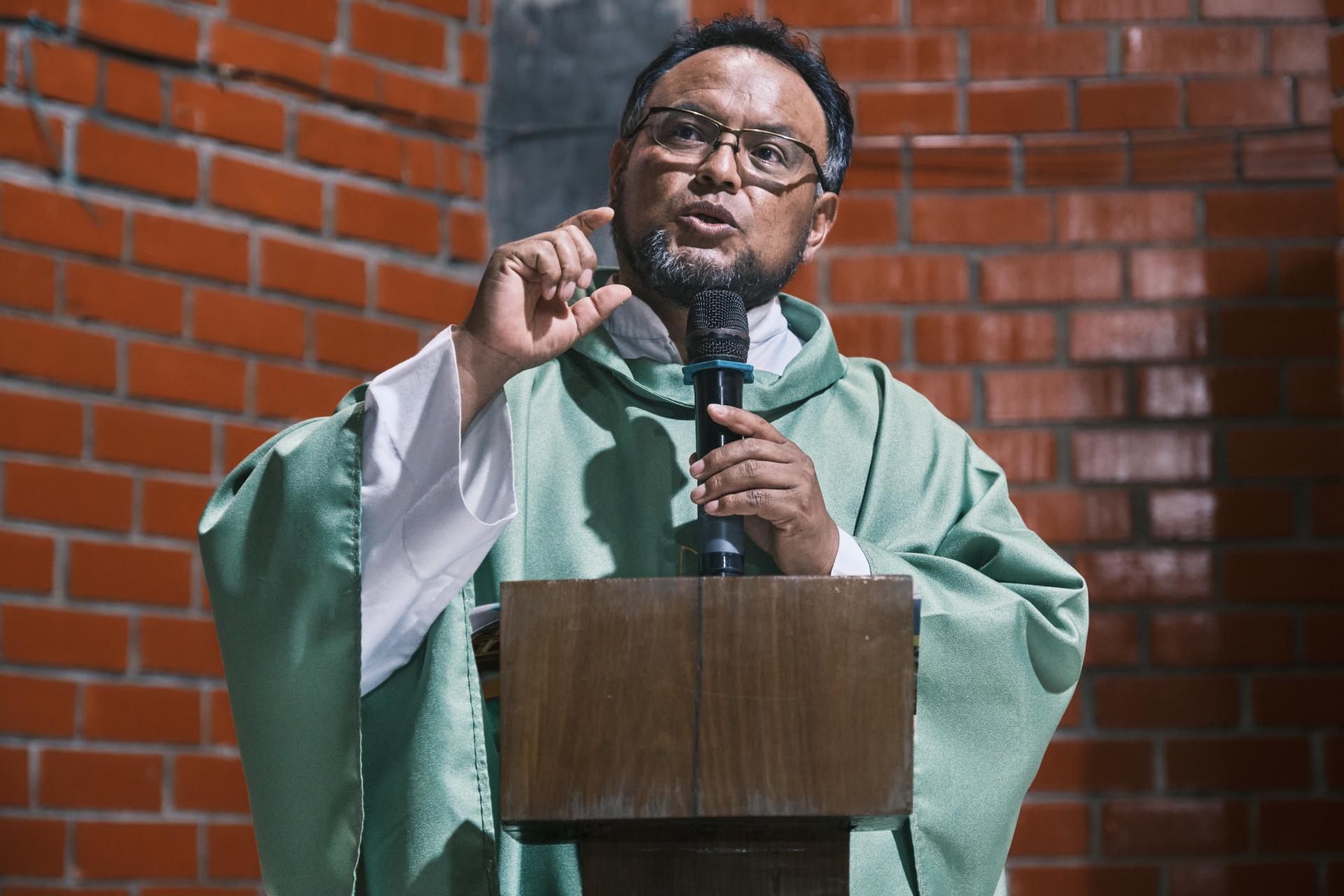
A Comrade in Faith
In the kitchen of his home adjacent to the church, Father Patricio Broncano reflects on nearly five years serving as the Catholic parish priest of Las Pampas. Outside the window, his carefully tended garden blooms with flowers and exotic fruit trees—a connection to creation he believes is essential to understanding spirituality and being close to God.
But Broncano has become more than the community's faith leader. He has emerged as a comrade in the fight, a passionate advocate who stands alongside land defenders on the front lines. The church is planning to rotate him to a new assignment after his five-year term, but he's not leaving the struggle behind: he's joining an environmental advocacy team within the Catholic Church, carrying the torch beyond the borders of Las Pampas.
As Broncano prepares to leave Las Pampas, he shares with urgency how the situation there is "worse than worse." Asked about defenders facing 30 years in prison for protecting their territories, "It's an aberration. It's crazy. Power has no limits," he says, invoking Colombian President Gustavo Petro's recent speech at the United Nations, where he spoke about the dehumanization of humanity: “Human beings are immersed in total greed and see no limits. And greed is reaching communities—not poor communities, but communities in situations of vulnerability to technology that comes from outside."
Broncano leans forward, an undeniable intensity in his eyes. "Things have been happening within the legal framework, and there is obvious manipulation of the powers of the State. That's when minorities lose out to a political majority," he says, explaining that the manipulation is evident in how the courts have handled the community's legal challenges. "We've been fighting the mining intrusion, and we submitted documents showing the first consultation was [fraudulent] and violent. We presented people who were shot, who were beaten." He pauses, shaking his head in disbelief. "The judges didn't accept this documentation."
Broncano's activism hasn't gone unnoticed—or unopposed—within the church. His bishop once questioned him directly: Why are you doing this? "I said it simply," Broncano recalls. "I think people are the most important thing. The well being of the people is the most important thing. It's not what comes from outside that gives people well being, but what we experience and transmit and share. That's what gives life."
Broncano admits that he is seen as a renegade within the church. "They label us as troublemakers, as wanting to leave the church, as being outside the boundaries of the church," he says. But, he defends his position with theological conviction. "The values of the gospel are these: defending people's lives, defending the life of nature,” he says, adding that political forces within the church hierarchy are compromised or have connections to the State.
The church's role in advocating for human rights is beginning to evolve, Broncano says. He has joined the Laudato Si' movement, named after Pope Francis's encyclical on environmental care—signaling a more active engagement in the resistance. "Before, the church was just accompanying," he says. "Now, we want to get involved, to be on the front lines. We want the church's struggle to be more visible." The bishop recently attended a Vatican convention marking the 10th anniversary of the encyclical, bringing Ecuador's mining conflicts to an international stage.
"For me, this space is for life, and with its mistakes, like everything else. But life is generated here, and a spectacular life to share with others. The goodness of God doesn't come from the outside—it comes from the inside, from how simple people live their daily life. We are not poor, we are not from the third world. We are human beings who have made our world here, and from here we share it with others. We are not the last. We are the first in this space," Broncano says.
Broncano believes the State is motivated to disregard human rights in pursuit of profit because of its status quo, with no checks and balances. "For a long time, there have been deals between our previous leaders where they were gradually selling the country off, pretending to make progress in projects. They've been selling things off, and now we're sold out," he says. "Ten years ago, they sold us out to China, they sold our oil resources to the United States, and now we can't back down. They want to take away all the existing materials from us by destroying the land of America, destroying the land of the South, destroying these very natural environments to satisfy their industrial well being."
Broncano’s voice rises, his frustration evident. "The government has been lending itself to this manipulation year after year. There's a hunger from the industry, of which we are simply the object."
Broncano is concerned for the well being of Carvajal, and he prays with and for the entire community of defenders. "Every Thursday, we dedicate ourselves to praying for all our leaders, for everyone who is being criminalized,” he says. The organizing is multifaceted. Women have created communal gardens to provide food for those in the resistance. Small groups meet regularly to coordinate their efforts and share their spiritual journey. "This has united us, made us brothers," Broncano says. "We've been able to share our daily journey, even our mistakes."
Las Naves: A Different Front
About 10 kilometers from the El Domo-Curipamba mining operations, in the community of Las Naves, the resistance takes a different form. Here, oranges and cocoa grow abundantly, their sweet and tangy scents mixing in the humid air. Dragon fruit and banana trees stretch in orderly rows across the hillsides. Multiple waterfalls hide along forested paths. The rivers, though showing signs of declining levels, remain clean enough to drink from and water crops. Locals describe it as a fertile paradise—a landscape that is both natural rainforest and carefully cultivated farmland, testament to generations of agricultural knowledge. It's precisely this abundance that residents say they're fighting to protect from the El Domo-Curipamba project, now owned by Toronto-based company Silvercorp Metals Inc.
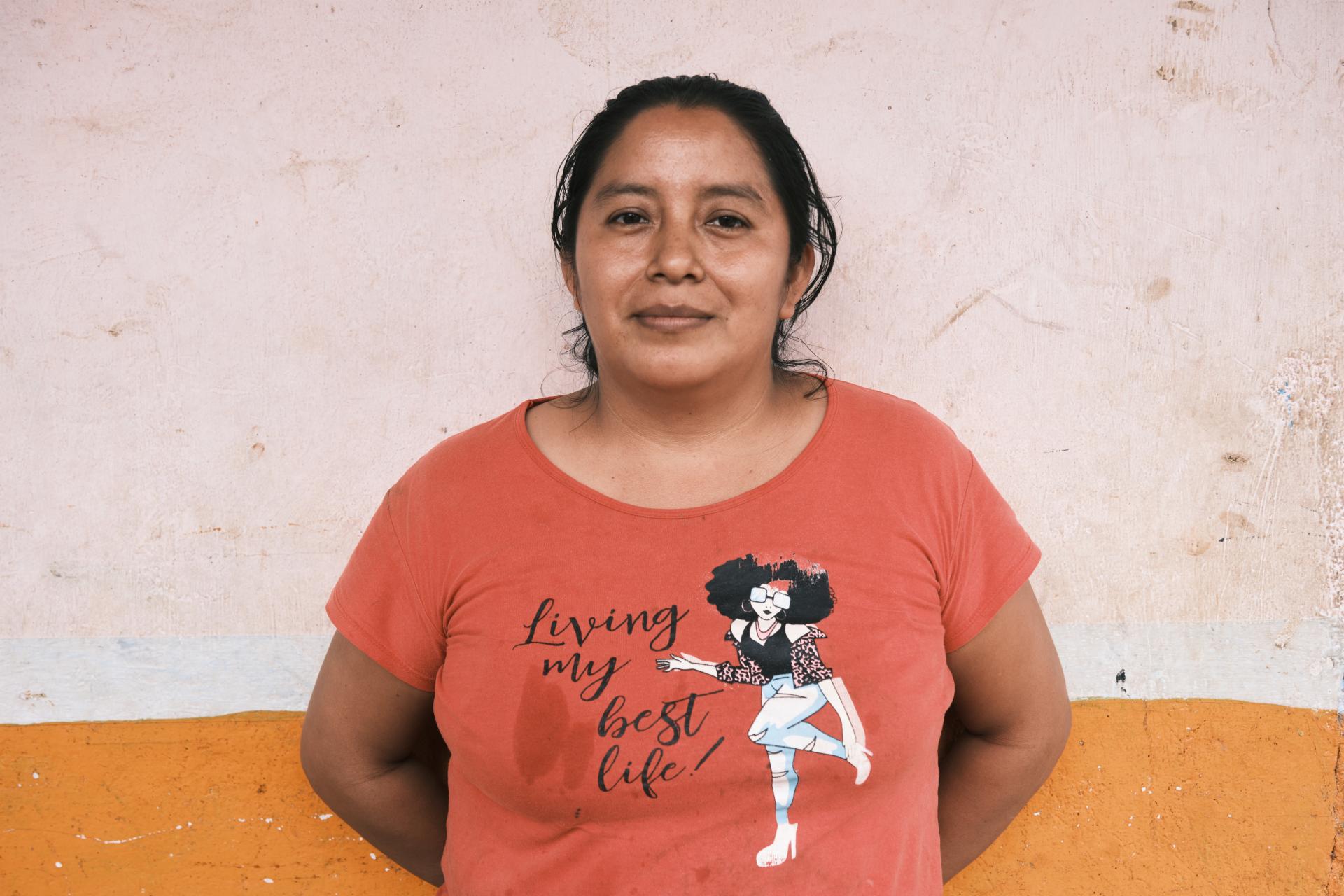
Deysy Coles, 33, is short in stature but fierce in reputation. As president of Recinto la Unión, an organization formed by local community members to resist the mine, she has become a central figure in the struggle. At the resistance camp—the blockade her community has maintained on a public road—she moves naturally as a leader, checking in with families taking shifts to guard it.
The blockade itself is modest: a small, wooden building with a makeshift kitchen beside it and a sitting area covered by tarps where community members gather to share communal meals, play cards, and support each other when authorities arrive. Whole families, including children, take turns surveilling the road. The scene reflects both the ordinariness and extraordinariness of their resistance—people defending their home in the most basic way possible, physically placing themselves in its path.
"I was born here. I grew up here. I think I'm going to die right here,” Coles says. “I love my canton, my province, and Ecuador, because it's everything that, thank God, nature gives us. What you plant, you harvest."
The people of Las Naves are hardworking and proud, deeply connected to the land through generations of cultivation. They declare themselves Indigenous, defying government attempts to discredit them by labeling them Mestizo with no ancestral interest or connection to the land. This dismissal is a legal strategy that undermines their rights to consultation and consent regarding projects that affect their territories.
For communities like Las Naves, the fight is about their livelihood. They live off the land, grow their crops, raise their children, and dream their dreams on these hillsides. If the water and land get contaminated, everything is at stake. "We have cacao and we can process it, make chocolates or transform the raw material," Coles explains, listing the economic activities that sustain the region. "Oranges for orange wine. We have green bananas to export banana flour to other countries. We have a large amount of abundance here."
But Silvercorp is armed and powerful. The company has blocked off a public dirt road located outside Las Naves, stationing guards dressed in all black, faces covered with balaclavas, and armed with shotguns. The message is clear: don't dare to pass. Backing the hired private security is the Ecuadorian military, which has deployed dozens of troops to patrol Las Naves and areas surrounding the mine to ensure the company's interests are protected from local resistance.
The military's presence is palpable. Soldiers in army gear with guns ride in the backs of military vehicles, parading through the streets and up and down the backroads of Las Naves. According to Coles, the police and military stop at the blockade regularly. She believes the mining company pays for the expenses of the military presence in Las Naves. During research for this story, restaurants in the town admitted they bill the mining company when military personnel eat at their establishments. "The military, they come to us three times a day," Coles says. "The company workers come to provoke us too, like they want to punish us."
The confrontation came to a head one night in early September, an event that was broadcast widely on social media. Military forces arrived after dark to dismantle the blockade. Company workers had called for backup, summoning all available personnel to confront the defenders. "They called the police," Coles recounts. "When the workers saw we wouldn’t let them pass, and not even the police themselves could get through, they called the military. And they came with their tanks. It was as if we were criminals, groups of thugs. But in reality, we're farmers. We're peasants."
The military set up a checkpoint at the community blockade, creating a tense standoff between armed forces and farming families. "Thank God, things didn't get worse," Coles says. "We told them they weren't going to get through. We got in the way. Eventually, the military left, and the company workers also left."
A Consultation Without Consent
The community's resistance is rooted in what they describe as a flawed consultation process. According to Coles, only people who worked for the mine were invited to the consultation that the government of Ecuador used to grant the license for the project. "At the beginning, the mining company supposedly said in their project that this sector is arid, that it has no cultivation. But in reality, one comes and sees that it's not like that," she says. The company's environmental impact assessment, she alleges, misrepresented the area's fertility and agricultural productivity.
The community has taken legal action, using Article 98 of the Ecuadorian Constitution, which guarantees the right to freedom of expression, assembly, and association, to form the legal basis for their right to protest and establish the blockade. On May 13, they filed a lawsuit on behalf of the entire community. "We filed to tell the company that enough is enough, that our voice is heard," Coles says. But the legal battle has come at a cost. About a month and a half after filing, the community faced strong police repression. "They came to us, and the riot police attacked us."
The repression in Las Naves mirrors the pattern seen in Las Pampas, but has rapidly worsened. According to Mining Watch Canada, 29 environmental defenders have been charged in relation to the El Domo-Curipamba project, and 13 have been convicted with prison sentences of up to 4 years—despite what advocacy organizations describe as weak or fabricated evidence.
Six of these defenders lost their provincial-level appeal and are now awaiting a cassation hearing before Ecuador's National Court of Justice. Three others face a provincial appeal hearing in November, following a mistrial in July. United Nations experts and 283 organizations from around the world have condemned what they call the aggressive persecution of human rights defenders, calling for an immediate closure of criminal investigations and judicial proceedings.
Among those convicted is Freddy Díaz, president of the Las Naves Water and Nature Defense Front, who received a three-year prison sentence. "They are criminalizing us for protecting our water," he says. "They are putting our basic rights and livelihoods at risk—all to line the pockets of a few Canadians who are already rich."
Despite the community's efforts, the mine has found ways to proceed. The company accessed an alternate route to reach the mine via a high mountain road and repaired it to accommodate their machinery and workers. The blockade, maintained for over three months, no longer stops the mine's operations. The reality is bitter: while concerned community members sit at their roadside blockade, hoping and praying something will stop the mine's progression, the work trudges forward on another path. “They are carving into the earth right now," Coles says.
The question facing the community is what comes next. "We don't know how long this will last," Coles says. "We have to talk to our colleagues about what to do. Let's see what the majority says." The blockade has evolved into more than a tactical position—it's become a symbol of resistance, a gathering place, a statement of presence. Even if the mine's trucks no longer need this particular road, the community continues to occupy it, a statement of their refusal to simply disappear.
In August 2024, Silvercorp announced that Ecuador's Ministry of Energy and Mines had issued a Resolution of Change of Phase for the El Domo-Curipamba Project, advancing its legal status from Economic Evaluation Phase to Exploitation Phase. This authorization, equivalent to an exploitation agreement for large-scale mines, allows for the start of construction and subsequent operation of the mine. "We reaffirm our commitment to modern, responsible development that will benefit the communities where we operate and the Country of Ecuador as a whole,” Rui Feng, Chairman and CEO of Silvercorp, stated in the company's press release.
But that commitment rings hollow to residents like Coles. Since acquiring the project in 2024, Silvercorp has continued to downplay the mine's environmental risks and ignore the social conflict and human rights violations that have marked the project since 2006. "Silvercorp Metals investors should be aware that the company acquired a project marred by social conflict, human rights violations, and significant environmental risks," says Emily Conrad, Director of Proyecto Dulcepamba in Ecuador.
A Message to Canada
"I would like there to be that willingness to talk, if possible, for a moment. The availability to travel to Canada and talk with the prime minister, and tell him, ‘Please, tell your people don't send anyone to repress us,’” says Coles. She wants Canadians to know about the collusion she's witnessed. "The military themselves couldn't say that the mining company paid them, but they do. They pay them [in] food and give them their commissions so that they can take care of the sector here. We asked the military, 'Doesn't the State pay you?' They said, 'They do pay us, but the company also pays us—the bosses, the tough ones. That's why we come to do the work, they send us.'"
Coles began organizing in late December 2024, and by February and March, mining vehicles were coming through with increasing frequency. "They were coming more and more often. This road was a disaster—it was damaged. There is a small house near the road, and it was cracked because of all the big machinery coming through." The roads, she explains, are wearing away. "The land is so fragile and so sensitive. This road isn't suitable for the heavy machinery that came up here."
Her message to the international community is urgent: "People in Canada, or perhaps the Canadian government, don't know that people are being displaced, not only here but in other parts of the province. It's clearly the same company with different names." She pauses, then adds, "This is the reality. Nothing is impossible now. We need to talk to these people. Someone can do something."
The resistance in Las Naves doesn't exist in isolation. In September 2025, tens of thousands of Ecuadorians took to the streets in a nationwide strike led by the Confederation of Indigenous Nationalities of Ecuador (CONAIE) and allied civil society groups. Among the central demands: that the Ecuadorian government annul environmental and mineral exploitation licenses for Silvercorp's Curipamba–El Domo project, along with two other Canadian-owned projects.
The strike built on earlier momentum, including a historic protest on September 16 in the city of Cuenca, where more than 100,000 people demanded the permanent cancellation of the Canadian-owned Loma Larga mining project. In response, President Noboa announced his administration's intention to annul that project's environmental license. "People were kind of blind before, I'd say," Coles reflects. "But today, with what we're seeing at the international level in Ecuador, and also here—contaminated water causing skin diseases and all that—people are waking up.”
Mining Watch Canada's Latin America Program Coordinator Viviana Herrera puts it plainly: "Investors need to know that the El Domo-Curipamba mine continues to face significant local and national opposition, and that ongoing legal challenges could translate into major reputational and financial risks."
The Rock Thrower
At 75, Ana Tapia has become something of a legend in Las Naves. Her fame stems from an incident earlier this year when she threw rocks at military forces during a protest. When asked if she considers herself part of the resistance, her answer is immediate: "I've been in the resistance since it started, since I was 18, when this mining first started around here. We've been fighting ever since."
The cost of that fight has been steep for Tapia's family. One of her sons was imprisoned for his involvement in the resistance. "They put my son in prison because he went to prevent it," she says. "Like always, the authorities...arrested them. There were quite a few prisoners." Her son spent a month in jail following a peaceful resistance action when miners came to take possession of the land. Describing her son's imprisonment, Tapia's voice cracks slightly. "The darkest thing. Imagine the darkest thing in your life. That was very painful."
Tapia herself says she’s been injured multiple times. Three years ago, in 2022, she was hurt during protests when the company attempted to hold a consultation in Las Naves. "We also wanted to contribute our opinions, and they wouldn't let us in. Only the workers and families of the miners," she recounts, were allowed to participate in what was supposed to be a community consultation. When community members tried to enter, they were blocked. "People got angry. That's when the revolt started," she says. In the confrontation that followed, Tapia was struck. "They broke my finger. Here they broke me, like this. Stone with stone."
But the most vivid violence in Tapia's memory occurred this past June at the blockade. "We were there in the resistance. We were calm," she says. Then riot police arrived—200 officers and 100 soldiers to confront about 30 land defenders. "When they came, and since it was a hill, they wanted to push us up the hill. So we stood there. We threw stones. We stood there tightly. The 30 of us who were there—you can imagine—a cordon of police. And they were well armed."
The police fired tear gas first, then began shooting rubber bullets. "They shot a lady here in the shoulder, right where I was standing right next to her," Tapia recalls. "For about two or three months, I suffered from very severe deafness from the shot. They blew my ear out, and I went deaf."
For Tapia, the mining company's promises of employment ring hollow. "People say we need work here, but we have better work. There's no one who works harder. We have cocoa, coffee, oranges, greens—all those things. There's plenty of work here." She owns a few hectares where she grows cocoa, oranges, citrus products, coffee, and plantains. "There's more than enough to live here."
She describes how the company tries to buy support. "They come to offer work. I don't know how much they'll pay them. Then they come to divide people here. They give people gifts, nice gifts. And with that, they buy people—young people—they never stop trying to buy us. But we know what the land gives us, what the fruit gives us."
The Threat to Water
Tapia's opposition to the mine stems from what she's already witnessing. "It's bringing us bad things. They're drying up the water. Our water has already decreased a lot. We need water. That's why we're fighting—because they're going to dry up our water, and on top of that, they're contaminating so much in the air and among the plants. Miles of it will dry up. You won't see the fruit that's there now." The mine is still in the exploration phase, but already the impacts are visible. "What they're doing right now is devastating everything in the mountains to build camps and make the dikes.”
What troubles Tapia as much as the environmental destruction is the militarization of daily life. "Since the mining company came here, there was social division, first and foremost. Never before in my life—I was born and raised here, and I'm getting older, too—what we're seeing now has never been seen here. Since the mining company came to the canton, we've seen social division."
Tapia says the constant presence of police and military feels like an occupation. "As citizens here in the canton, we feel very repressed by the presence of the military. I don't know why, because we are not terrorists. We're not criminals here. We're farmers with calloused hands. We work here." She emphasizes that the security forces aren't protecting the community, they're protecting the mine. "The police, the military, they even travel in the mining company's cars. They're not serving the people. They're serving the mining company."
When asked what can be done to stop the mine, Tapia's answer reflects a deep pessimism about the State. "I don't know. Because in the first place, we have the government of Ecuador, it has sold all of Ecuador. Imagine: there are 24 provinces, and 22 of them are mining concessions. So where are we going to go? What are we going to do?"
An Uncertain Future
As the mine advances in Las Naves, progress in Las Pampas has stalled. The project remains in what Carvajal describes as "advanced exploration," with no camps or machinery yet operating in the immediate territory. This is due, in part, to the numerous legal challenges the resistance has filed against the company.
But defenders say the legal system is often stacked against them. When the company attempted a prior consultation—a legal requirement meant to obtain community consent—residents documented what they allege was fraud and violence. People who were shot and beaten provided testimony to the courts. But according to community members, the judges didn't accept this documentation and instead accepted the mining company's version as valid.
The consultation, which defenders argue was unconstitutional, has become another legal battle, with the community now attempting to file a complaint in the constitutional court. Appeals for protection filed at the canton level have been denied, and the community is now preparing to take their case to the provincial level of Cotopaxi.
The mine's shadow has poisoned daily life in both the surrounding rural communities of Las Pampas and Las Naves. Farmers who once worked side by side now eye each other with suspicion. Gatherings that used to celebrate harvests now turn tense with arguments over the project's promises and threats. Neighbor has turned against neighbor in disputes over whether mining represents opportunity or destruction.
Criticism of Canada's role in enabling these projects came to a head in early February 2025, when Ecuador finalized negotiations on a new trade deal with Canada. Ecuador's conservative president promoted the deal as one that would create local jobs while holding both countries to the highest labor and environmental standards. But for both communities, the gap between stated commitments to environmental protection and human rights and the reality they're experiencing on the ground appears vast.
Carvajal’s work is never-ending. He says, “It’s about the cause and trying to help the people,” which motivates him to carry on. As he prepares to attend yet another meeting about the resistance, even while facing terrorism charges and death threats, he remains committed to what he calls "defending in a legal way."
From his vantage point on the hill, Carvajal looks out over Las Pampas—over fields and forests, over homes and tiny shops, over a community that has become his cause. And for now, he stands his ground.
Atico Mining CEO Alain Bureau previously stated to Cultural Survival that organized crime and “violent anti-mining protestors” were to blame for dissent against the project. He added that Atico has obtained the required permits, including environmental permits, from the Ecuadorian State and is therefore legally cleared to conduct operations in the region. State officials did not respond to repeated interview/statement requests. Cultural Survival also contacted Silvercorp Metals Inc. to request a comment, but received no response.
--Brandi Morin (Cree/Iroquois) is an award-winning journalist reporting on human rights issues from an Indigenous perspective.