By Dev Kumar Sunuwar (Koĩts-Sunuwar, CS Staff)
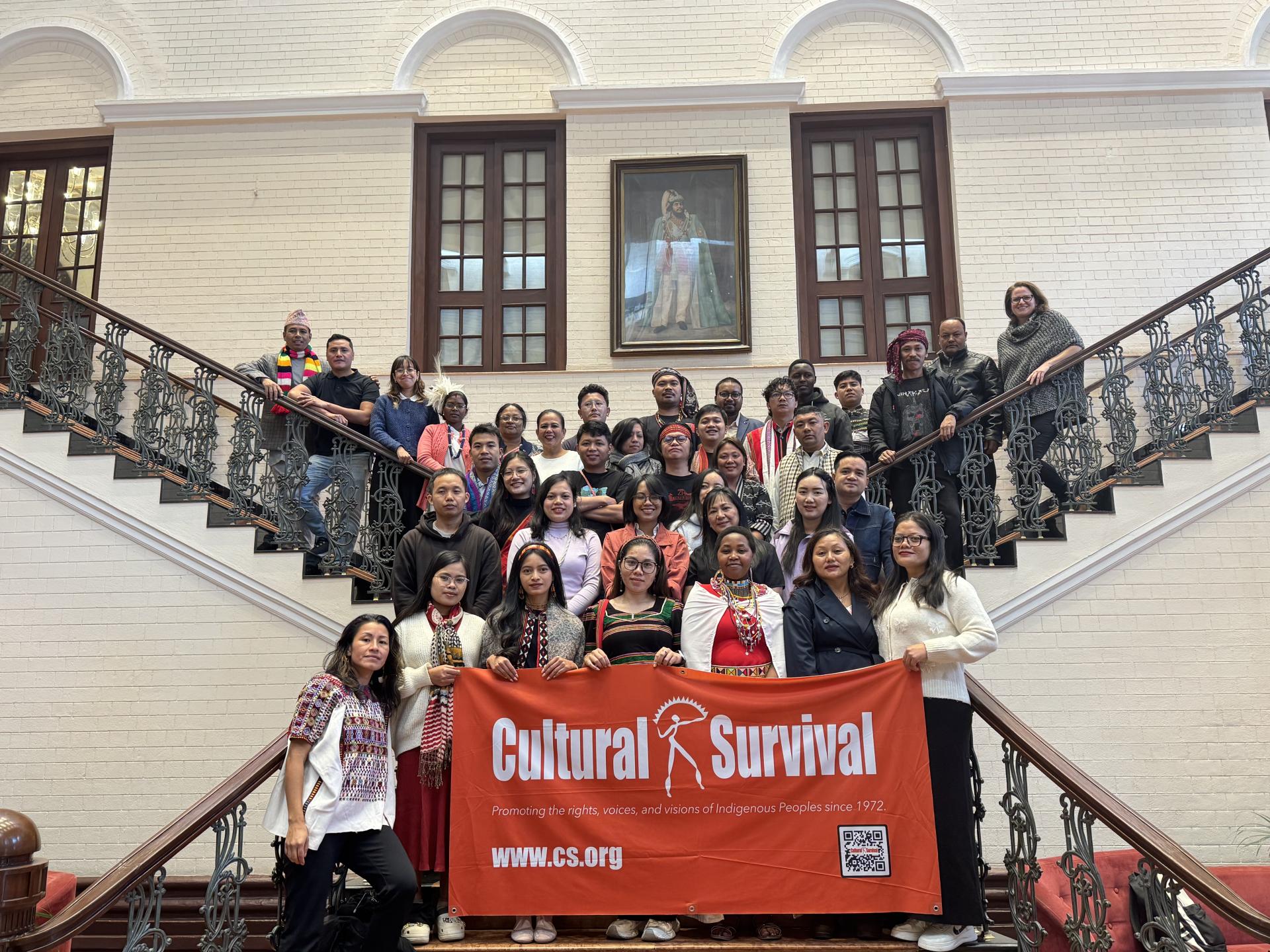
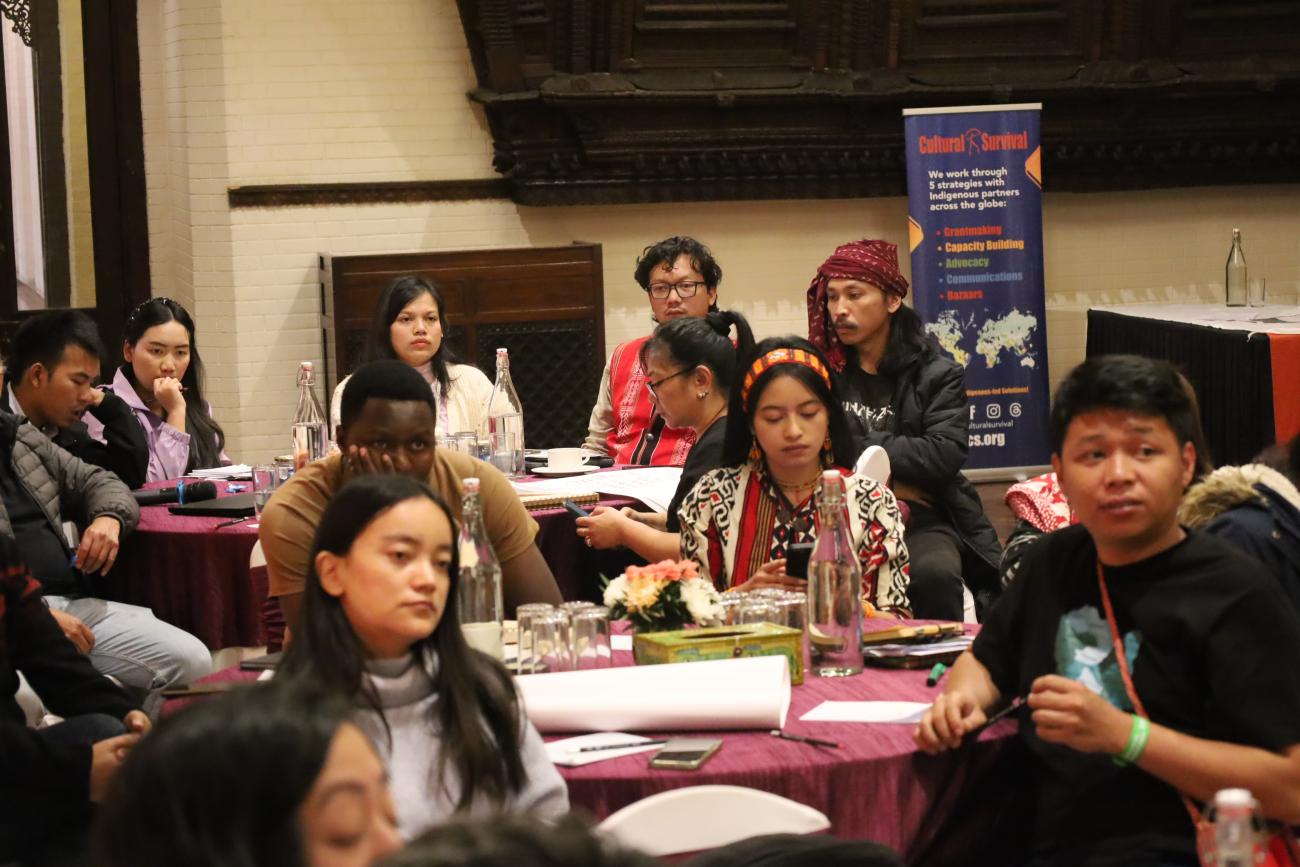
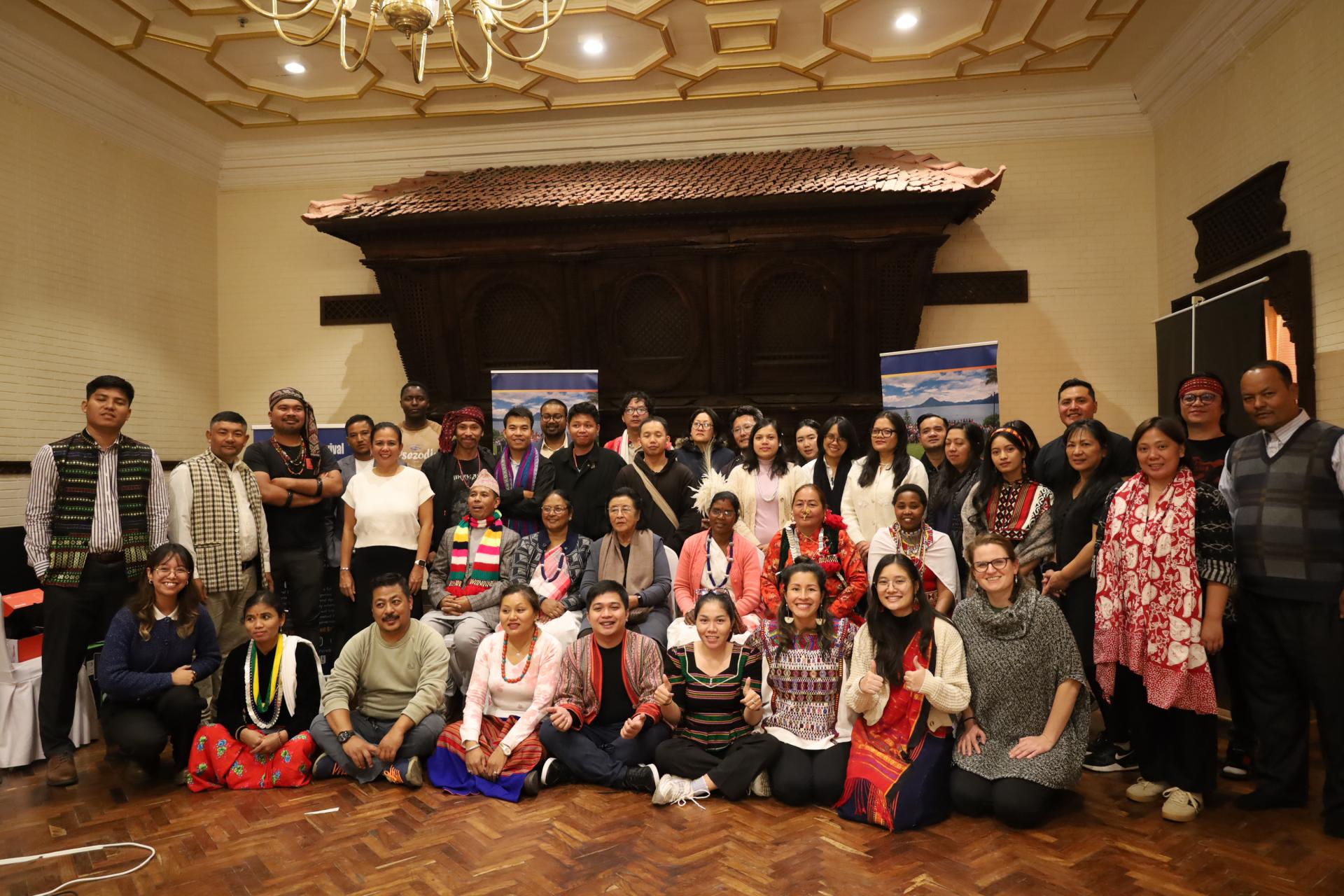
Indigenous leaders and rights activists from Asia and Africa gathered in Kathmandu for a three-day partners’ meeting from December 1-3, 2025, organized by Cultural Survival. The gathering focused on the escalating impacts of climate change and the urgent need to strengthen solidarity and Indigenous knowledge to build resilience. The event brought together 47 participants from eight different countries: Bangladesh, Cambodia, India, Indonesia, Nepal, the Philippines, Thailand, and Tanzania. This gathering underscored the shared struggles of Indigenous Peoples faced across continents and their determination to lead solutions to the global climate crisis.
Climate change is increasingly recognized as one of the greatest challenges of our time, with floods, landslides, droughts, and typhoons devastating communities worldwide. For Indigenous Peoples whose lives and cultures are deeply connected to their ancestral lands, territories, rivers, and forests, the impacts are particularly severe. “Indigenous Peoples contribute the least to climate change, yet they are among the most vulnerable to its impacts,” said Padma Othsal, Director of Students’ Educational and Cultural Movement of Ladakh (SECMOL), India, presenting SECMOL’s work as a ‘living lab’ for climate resilience. Osthal explained how solar architecture and zero-waste systems, among others, are being used to adapt, adding, “Our lands, resources, sources of livelihood, waters, and forests are being destroyed, but we are also trying hard to fight against it to protect and preserve them.”
Further highlighting SECMOL’s innovations, Othsal pointed to ice stupas, the artificial glaciers that store water for spring cultivation, and passive solar heating, as well as buildings. Othsal said, “We are proving that Indigenous innovation can make a city carbon negative.”
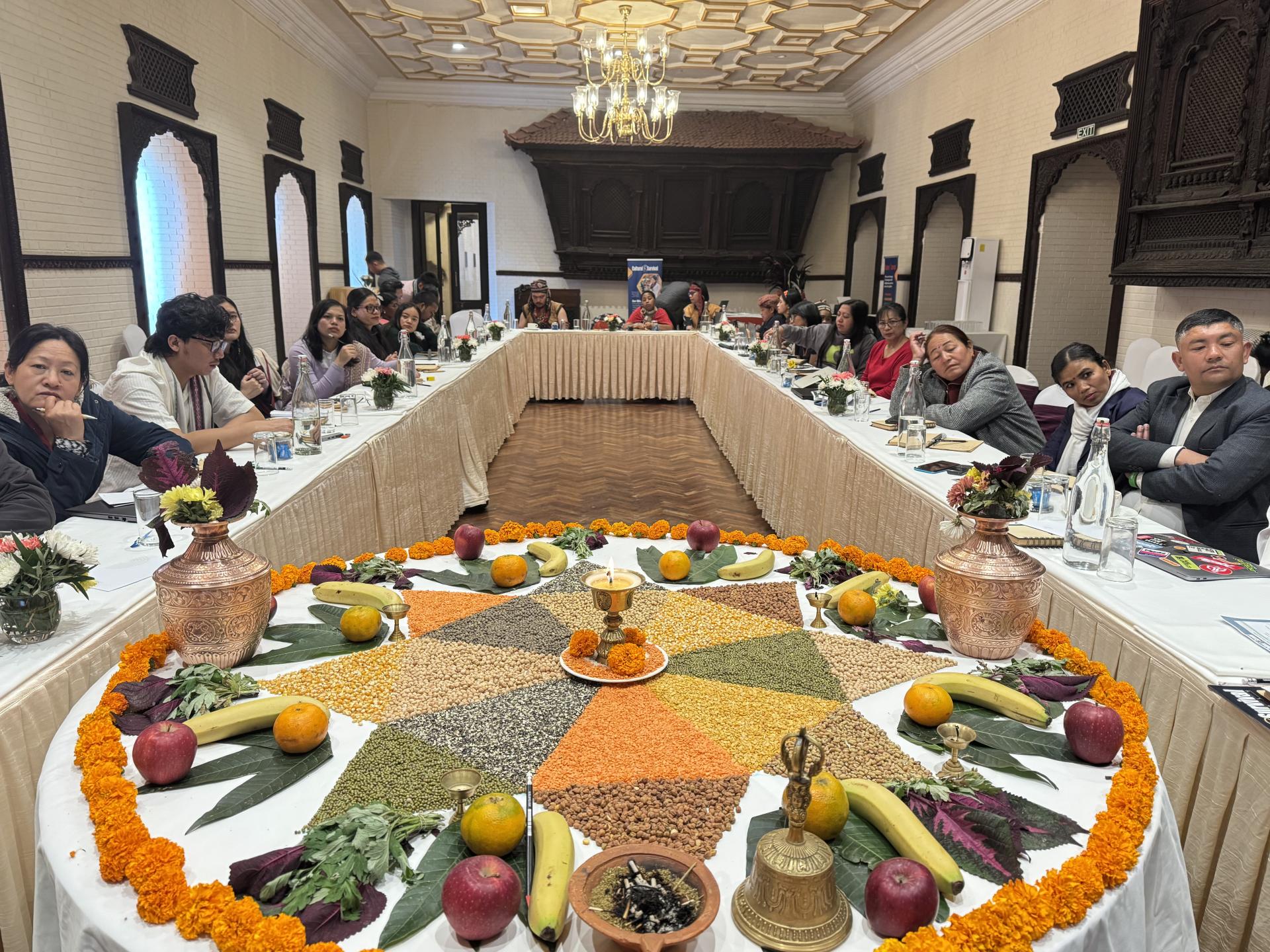
The meeting opened with a ceremony honoring ancestors, led by Indigenous women leader Laxmi Gurung from Nepal, who lit a butter lamp and offered prayers for the gathering. From the outset, the tone was one of resilience and unity. “If we are united, we will never be defeated,” echoed throughout the sessions, underscoring the collective spirit of the participants.
Country presentations revealed striking similarities in the challenges faced by Indigenous communities globally. In Bangladesh, representatives from IPNEWS Bangladesh, Ruwang Collective Arts, and Cultural Survival Indigenous Youth Fellows, members of the Chakma, Marma, Tripura, and Mro Indigenous Peoples, described how erratic rainfall, flash floods, and landslides have devastated their livelihoods. They pointed to the loss of ancestral lands and forced migration, worsened by demographic pressures as non-Indigenous populations expand into their territories. “Our rivers are sacred, our forests are sacred,” Satej Chakma, Editor of IPNEWS Bangladesh, said. “But they are being destroyed by so-called development projects, including tourism.”
Cambodian representatives from Conserve Indigenous Peoples Languages Organization (CIPL) shared how Indigenous communities, who make up just about 3 percent of the country’s population, are struggling with reduced crop yields, drying water sources, and the degradation of sacred forests. They emphasized the importance of reviving rotational farming and customary laws to protect forests. “We are documenting the Indigenous knowledge that our elders hold and teaching it to the youth through digital media platforms,” said Naung Sam Oeung, an Executive Director of the Conserve Indigenous Peoples Languages Organization (CIPL), Cambodia. “This is how we are resisting and trying to adapt to the challenges that we face.”
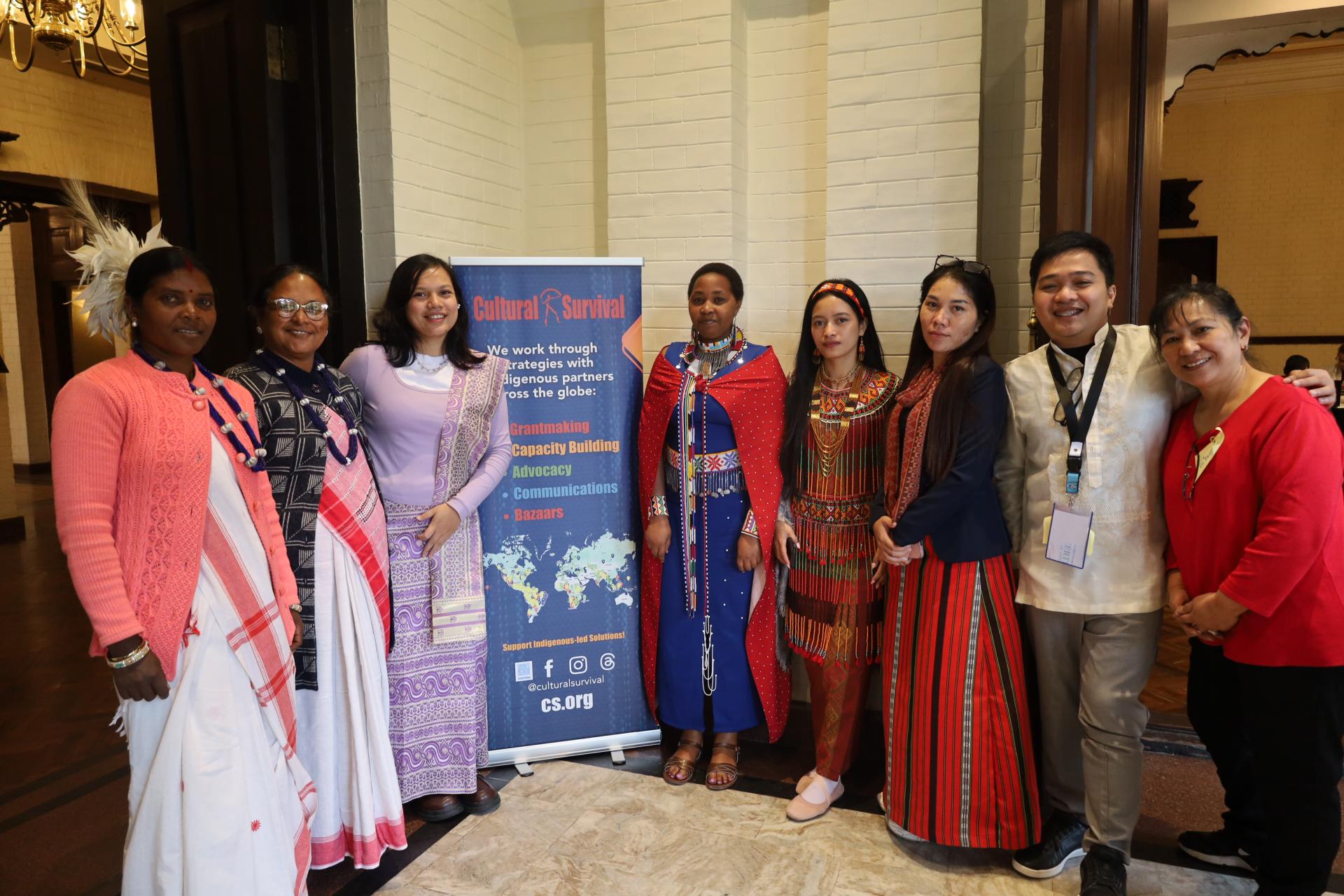
India’s presentations, mainly from Asur Adibasi Mobile Radio in Jharkhand, SECMOL in Ladakh, and Indigenous Journalism Fellows in Chhattisgarh, highlighted both the Asur communities in Jharkhand and Chhattisgarh and the innovative solutions to climate change emerging from Ladakh. The Asur Indigenous community spoke of displacement caused by mining projects and militarization. “Our forests are declared national reserves by the government, without any notice, consultation, or compensation, which means we are pushed out,” Vandna Tete, Coordinator of Asur Adivasi Mobile Radio (AAMR), explained.
The Indonesian delegation representing Kelung.ID, Radio Mars, and Local Orari described how deforestation and mining projects have displaced villages and polluted water sources. “We are simply demanding the recognition of our territorial sovereignty to our ancestral land and territories, and our human right to free, prior, and informed consent,” said Gerald Tiwow, an Indigenous Journalist and Researcher, associated with Kelung.id, Indonesia, “Without this, our Indigenous communities cannot sustain themselves, as they will not have the means for survival.”
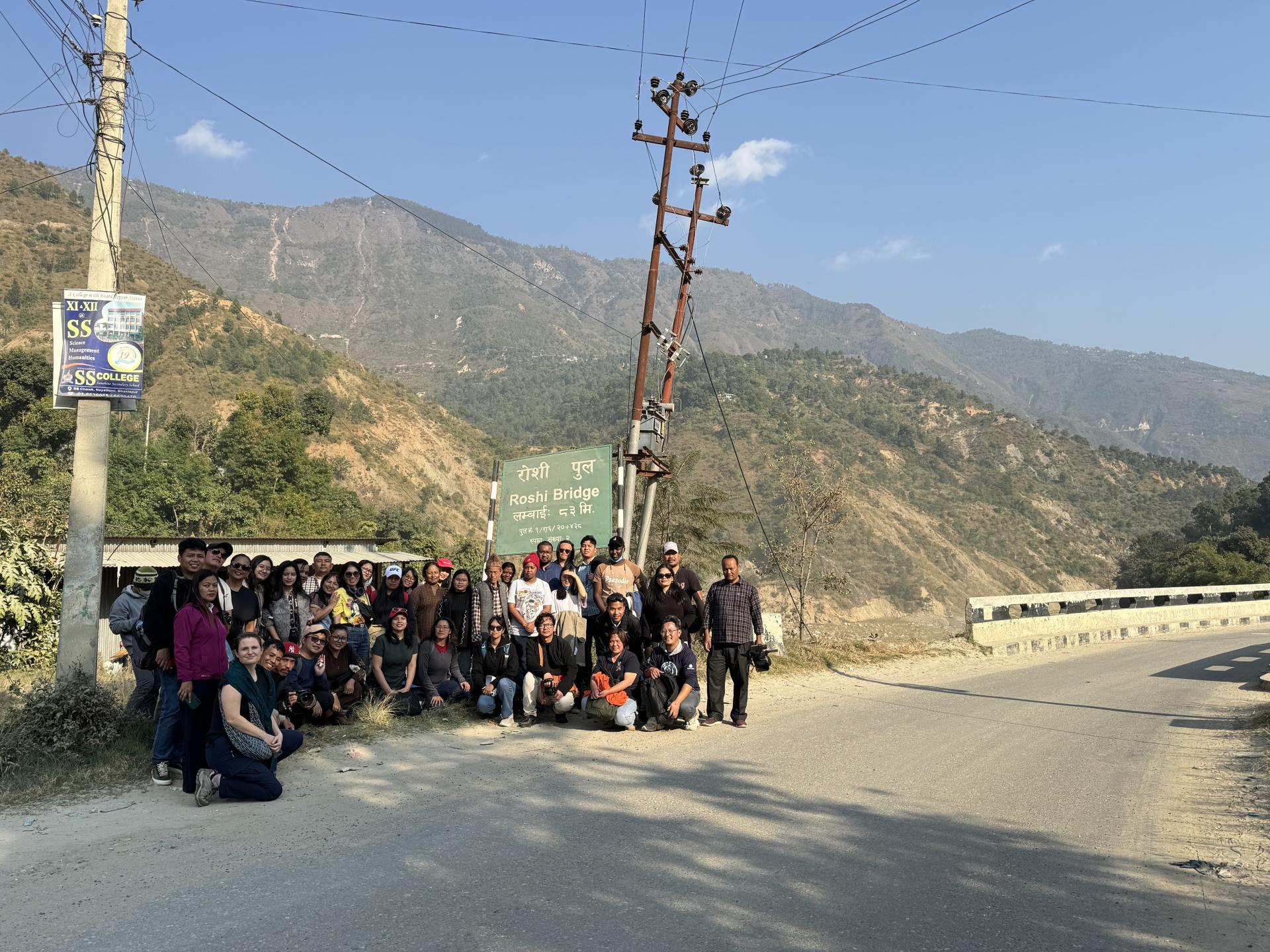
Nepal’s Indigenous Peoples organizations, namely—Indigenous Women League, Nepal, Nepal Tamang Women Ghedung, Nepal Majhi Women Upliftment Association, Bigu Thangmi Bhume Samaj, Sunuwar Women Society, among others, recounted the devastating floods and landslides of 2024, which resulted in devastating loss across 21 districts of the country, displaced thousands of families, most of whom were Indigenous nationalities living alongside the riverbanks. “Even elders in their 70s and 80s said they had never seen or heard such a disaster,” recalled a Mandhoj Moktan (Tamang) Lahskot, Roshi Rural Municipality, in Kavre District, giving a briefing to participants on how the flooding impacted them, during a field visit to Roshi Rural Municipality, one of the hardest-hit areas by flooding. He further expressed frustration with the government’s limited response. “Local government gave us a few sacks of rice and food, but told us they cannot help without funds from the national government.”
The Philippine delegation from Mindanao Climate Justice Resource Facility Inc., Alyansa Tigil Mina (ATM), and Radyo Sagada/Sagada Community Media Network Inc. described how typhoons, mining, and deforestation have disrupted Indigenous livelihoods. “Radyo Sagada is the only surviving Indigenous community radio in the Philippines, and it has been on air for over 15 years,” said Gwendolyn Gay Gaongen, Station Manager of Radyo Sagad, “Without Cultural Survival’s support, we would not be able to continue providing information in the language our Indigenous communities speak and understand, nor would we have a forum for Indigenous Peoples for discussion on the issues impacting them.”
Tanzania’s delegation, representing Indigenous Women Development Affairs (IWDA) and the Indigenous Journalism Fellowship program, spoke of forced evictions from ancestral lands, shrinking civic space, and gender-based violence. “Our livestock are confiscated, our women face violence, and our youth are forced to migrate,” said Alice Tipap (Maasai), Climate Change Action Coordinator, at IWDA. Yet they also highlighted resilience through intergenerational learning. “Our elders often teach us how to read the forest and water changes; how rotational grazing can protect our environment. Women are custodians of seeds and languages, and they are leading climate adaptation.”
Thailand’s representatives representing Pgakenyaw Association for Sustainable Development (PASD), described how rotational farming, a traditional practice that sustains ecosystems, is being wrongly blamed by the government for air pollution. “We are being criminalized for our traditions,” said Warika Tano, a member of the Karen (Pgakenyaw), from Thailand. In response, Indigenous youth are documenting their practices through Rotational farming, using technology and media to raise awareness. “We have been documenting the Indigenous food festivals in Bangkok and Chiang Mai to show our culture, our food, our art,” explained Narongdat Chuanchuenchom, a representative from PASD, “This is how we are fighting prejudice while at the same time documenting our unique identity.”
Beyond country-specific challenges, the partner’s meeting also highlighted the shared common challenges faced by Indigenous Peoples, such as extractive industries, state-led development projects, militarization, and shrinking civic space. Participants repeatedly stressed that climate change is not only an environmental crisis but also a social, cultural, economic, and political one. “Climate justice for Indigenous Peoples must be understood as both an environmental and rights-based imperative,” said Laxmi Gurung, Founding Chair of the Indigenous Women’s League, Nepal.
The workshops on operating the emergency and online radio stations during the meeting provided practical tools for advocacy. An emergency radio workshop enabled participants to run a live radio show, demonstrating how community radio can amplify the voices of Indigenous Peoples in remote areas. “Radio is our lifeline,” said Mathias Tooko, Indigenous Journalism Fellow and radio program presenter at Loliondo FM community radio, Tanzania, “It connects us, educates us, and gives us a platform to share our concerns and resist.”
Likewise, a field visit to Roshi Rural Municipality was particularly impactful. Participants witnessed firsthand the destruction caused by floods and landslides and heard directly from affected local communities. “This visit showed us that we are not alone,” said Sam Oeung, from Cambodia. “Our struggles are shared, and our solidarity is our strength.”
The meeting concluded with a powerful message: Indigenous Peoples across the world face similar challenges, but their resilience and resistance are remarkable. “We must continue protecting our languages, traditions, cultures, and knowledge systems,” said Nati Garcia (Maya mam) from Panama, Program Manager at Cultural Survival. “These are not just heritage—they are solutions for the future.”
As the climate crisis intensifies, Indigenous Peoples are demanding recognition, rights, and resources. They are also offering pathways to resilience through Indigenous knowledge, community-led action, and solidarity across borders. The partners’ meeting in Kathmandu underscored that Indigenous Peoples are not passive victims of climate change. They are leaders, innovators, and defenders of the planet, yet their voices are often marginalized, despite being essential to building equitable and sustainable solutions. “Without Indigenous Peoples, there can be no climate justice,” said Isa Dela Cruz, Program Officer at the Mindanao Climate Justice Resource Facility (MCJ) in the Philippines.