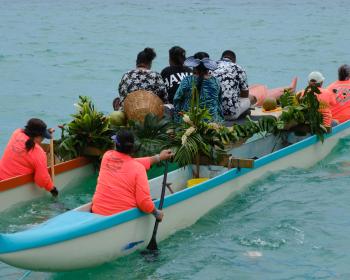
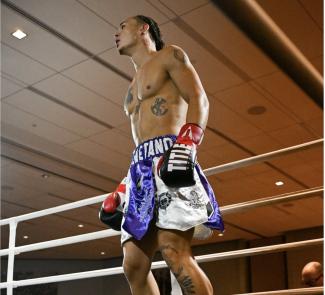
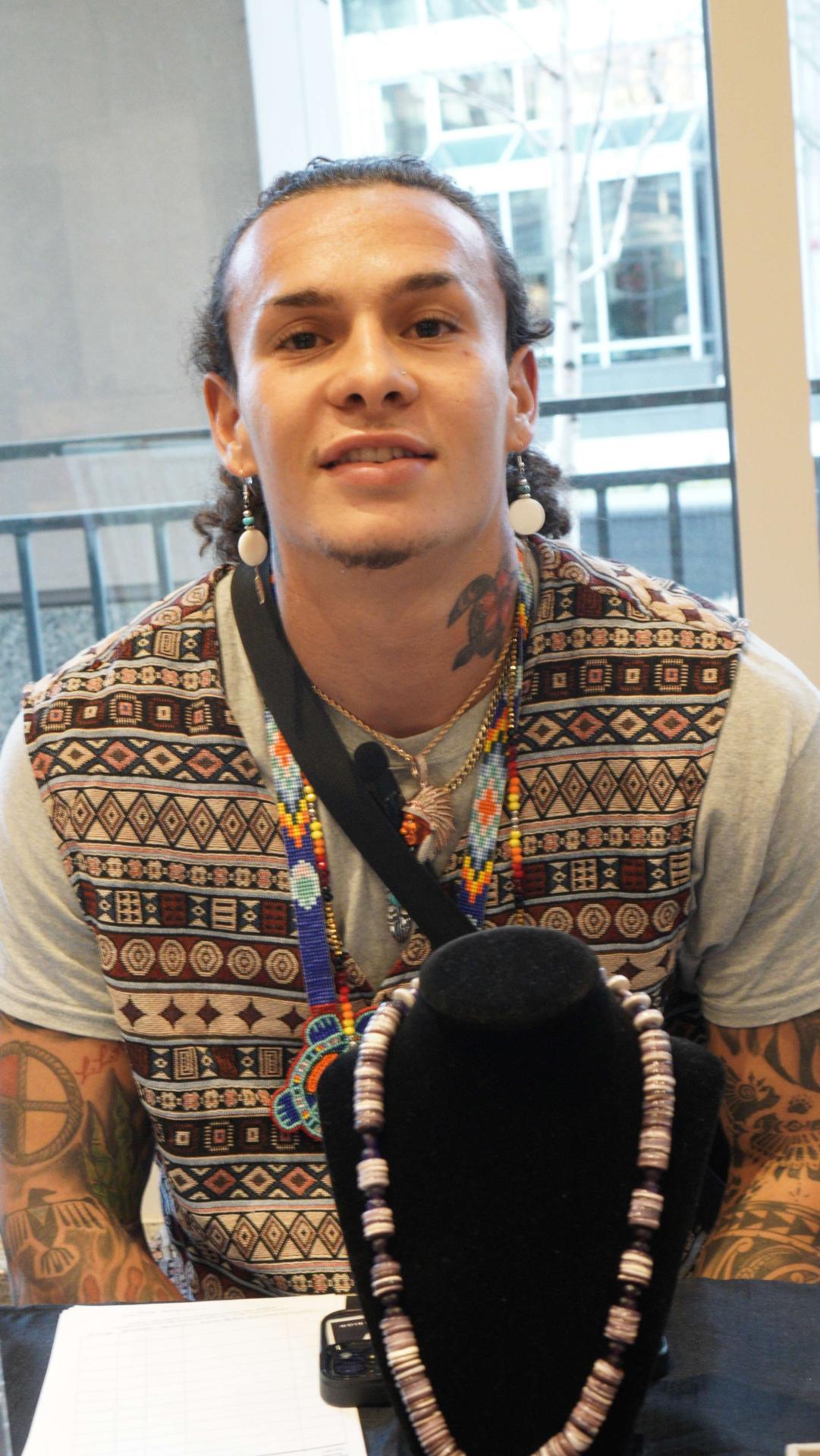
In a world that tells you to choose one path, Robbie DeGaetano (Mashpee Wampanoag) chooses two: boxing and art. A proud citizen of the Mashpee Wampanoag Tribe, he grew up between the Wampanoag and Narragansett communities, deeply immersed in cultural traditions through the guidance of his grandmother, Amelia Peters (Mashpee Wampanoag). Known to many as “Rob the Warrior,” the middleweight fighter is as dedicated to his artistry and cultural representation as he is to his athletic career.
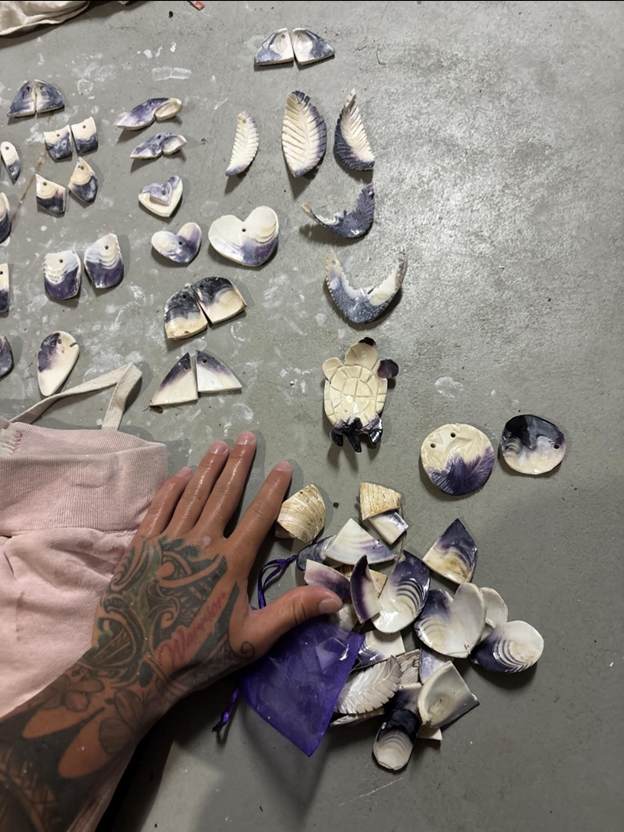
With roots in powwow dancing, wampum jewelry making, painting, and eastern warrior traditions, DeGaetano weaves his culture into everything he does, from his ring walk ceremonies to his creative work. He has earned recognition not only for his skill and power as a boxer, but also for his commitment to uplifting Eastern Native Nations and inspiring the next generation of Indigenous youth. “Being Wampanoag shapes the way I express myself through the dignity and honor I carry in everything I do. I like to bring along the generations before me and those after me, because they are our future,” he says.
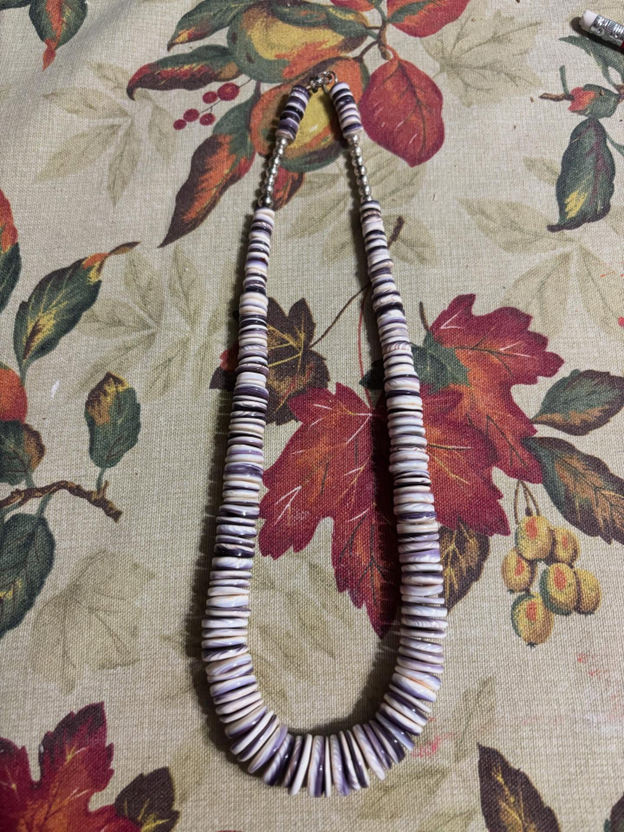
DeGaetano’s presence in the boxing world carries with it the strength and legacy of his Wampanoag ancestors. He brings cultural honor to every fight, entering the ring to the heartbeat of the drum and the steps of eastern dancers. Beyond boxing, his artistry reflects the beauty and resilience of his Peoples, from wampum jewelry to imagery of eastern warriors and Blanket Dancers. “The way that my community influenced my work was just being harmonious and having honor in everything that you do and putting your best foot forward in making sure not only to think about yourself, but to think about the people before and after you. I incorporate a lot of our wampum jewelry and many visions and images I have seen of our blanket dancers, eastern warriors, and females in our Tribe,” he explains.
“As an Indigenous athlete, a lot of the challenges you face come from people trying to take advantage of you and use you as an ‘Indian poster boy.’ They don’t really see you for your worth, and they come at you with a colonized way of thinking. They think they can colonize you and have you do what they want you to do. They want you to be a show boy. For me, part of my walkouts and fighting is done with honor. I don’t do it in any way that exploits myself—it’s all about the proper medicine,” DeGaetano says.
“What I do to overcome it is look past it, turn certain things down, and stay concrete in what I believe,” he continues. “Sponsors are usually the ones genuinely trying to support you, but promoters are often the ones trying to put you on their poster while you’re not actually getting any credit or recognition for it. For them, it’s just about checking a box. Large corporations see it as filling a diversity quota, and that’s what they’re really looking for. With boxing, I feel like my style of dance, Eastern War, is reflected in my fighting style because boxing really is dance; it’s all about rhythm. Dancers make really good fighters because fighting is dancing, and it correlates. You think of the footwork you need while boxing and the placement you need to have. If you want to be successful in boxing, you need two things: you need to be able to hit and not get hit. People think it’s all about punching, but really, it’s about where your feet can move. You can take two steps this way and two steps that way, but it’s all about how you move.”
Wampum is a traditional shell bead, most often made from quahog clams, made by Native Peoples of the Northeastern Woodlands.
All photos courtesy of Robbie Degaetano.