By Sukanto Barman (Barman, CS Intern)
Indigenous women in remote areas of Bangladesh uphold traditional values while contributing to their families and the nation's broader society in their own way. Their presence is now everywhere, including education, literature, culture, the economy, and community development. Yet, their struggles and contributions remain unrecognized.
The Indigenous Communities of the Thakurgaon District
Thakurgaon is a district of Rangpur division of northwestern Bangladesh, located just above sea level. The people of Thakurgaon largely depend on agriculture. Alongside the Bengali community, several Indigenous communities live here, such as Koch, Rajbangshi, Barman, Paliya, Santal, Oraon, Munda, Ho, Mahato, Malo, Kukumar, Hari, Bhuiyan, and Gankhu.
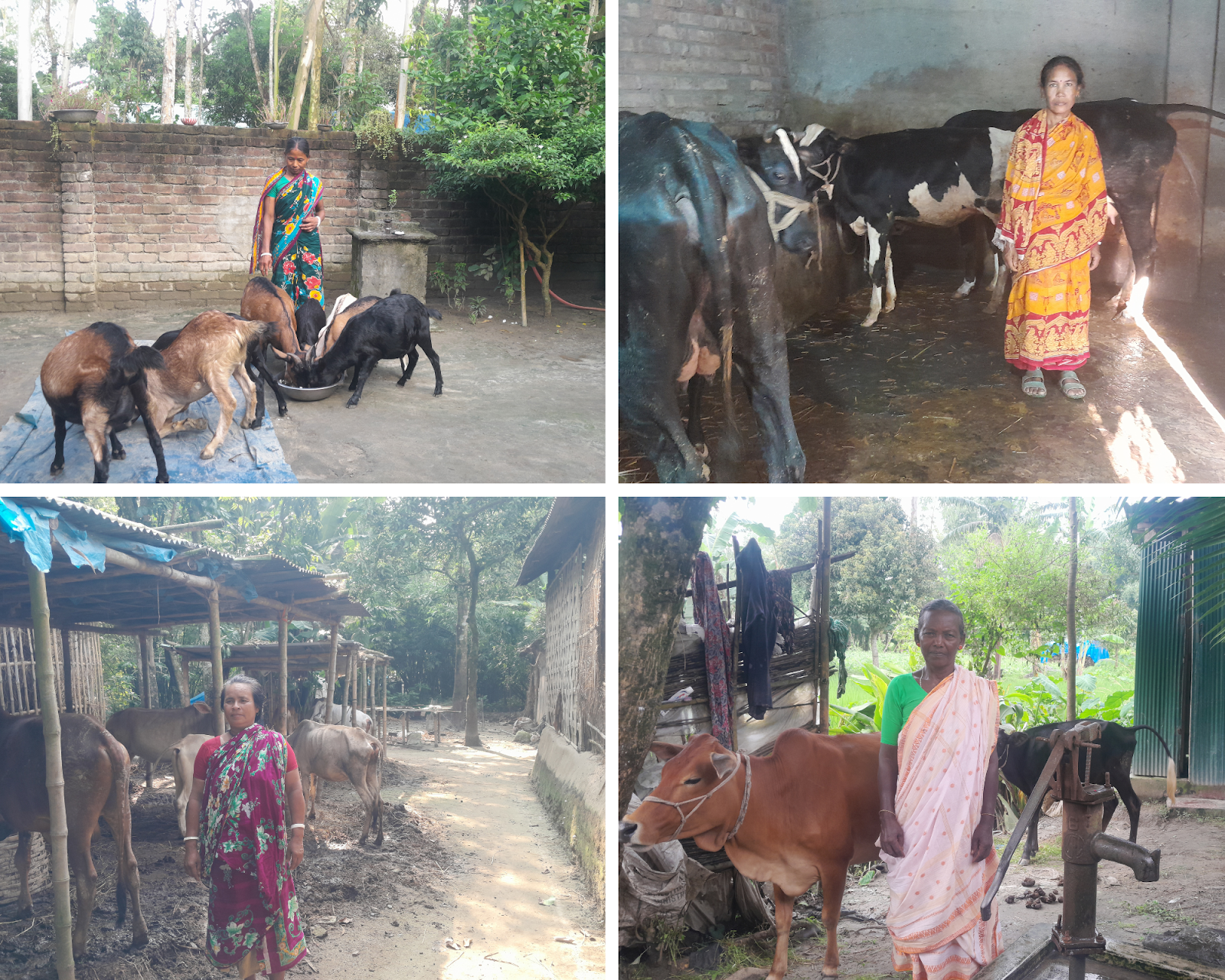
Clockwise from top left: Niru Rani (Barman), Shanti Rani (Koch-Rajbangshi), Rita Soren (Santal), and Dipali Rani (Koch-Rajbangshi).
Invisible Leadership
Many Indigenous women hold community leadership positions while simultaneously managing multiple responsibilities at home and in the fields. Nayami Toppo (Oraon) is one such “invisible” leader. She has worked for over 30 years to preserve the language and culture of the Oraon People and continuously encourages youth to pursue education to lift up the community. She is currently the president of Thakurgaon Mission Cooperative Credit Union. Under her leadership, 10-12 girls receive training in various sectors each year, and she plays a pivotal role in admitting girls to the nursing sector through her encouragement and guidance.
In addition, Toppo’s organization conducts seminars to promote the education of girls by providing books and other materials. When the government organized a short-term training program to improve the livelihoods of Indigenous people, she proposed the names of Oraon students for participation. "I contribute to my community by both economic means and education, because an uneducated community never understands their own worth, their community, or their existence," Toppo says. “To survive as an Oraon person, there is no alternative to educating youth, who will spread the language, culture, and other life ways of the Oraon, generation after generation."
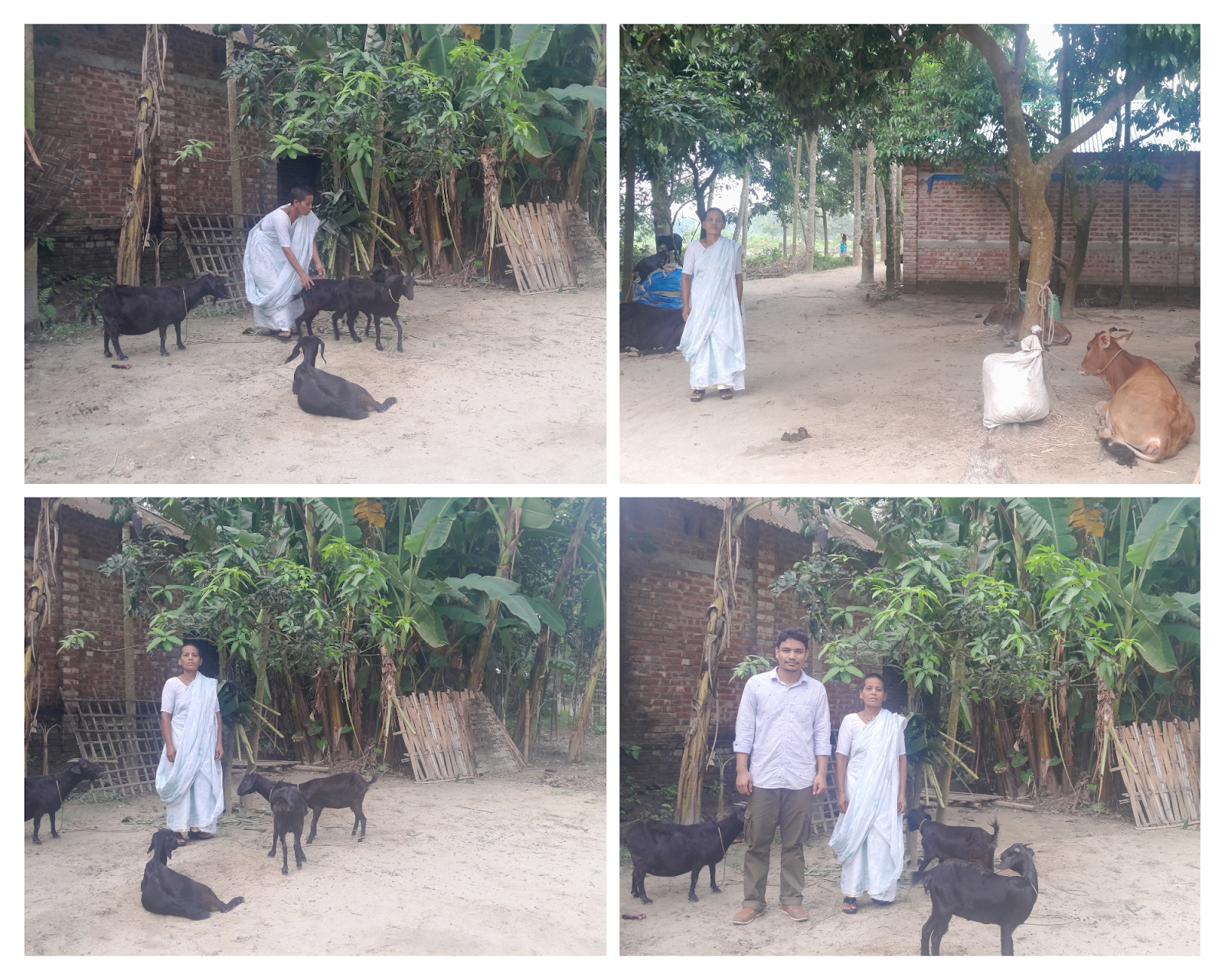 Leadership takes many forms—including within families struggling against adversity. Prava Rani (Barman), lost her husband in 2011. She has two children, a son and a daughter. In many Indigenous families, husbands often do not bear the educational expenses for their children. After completing a Secondary School Certificate or Higher Secondary Certificate, they send their sons to work in the labor sector. This is a very common scenario in many Indigenous areas.
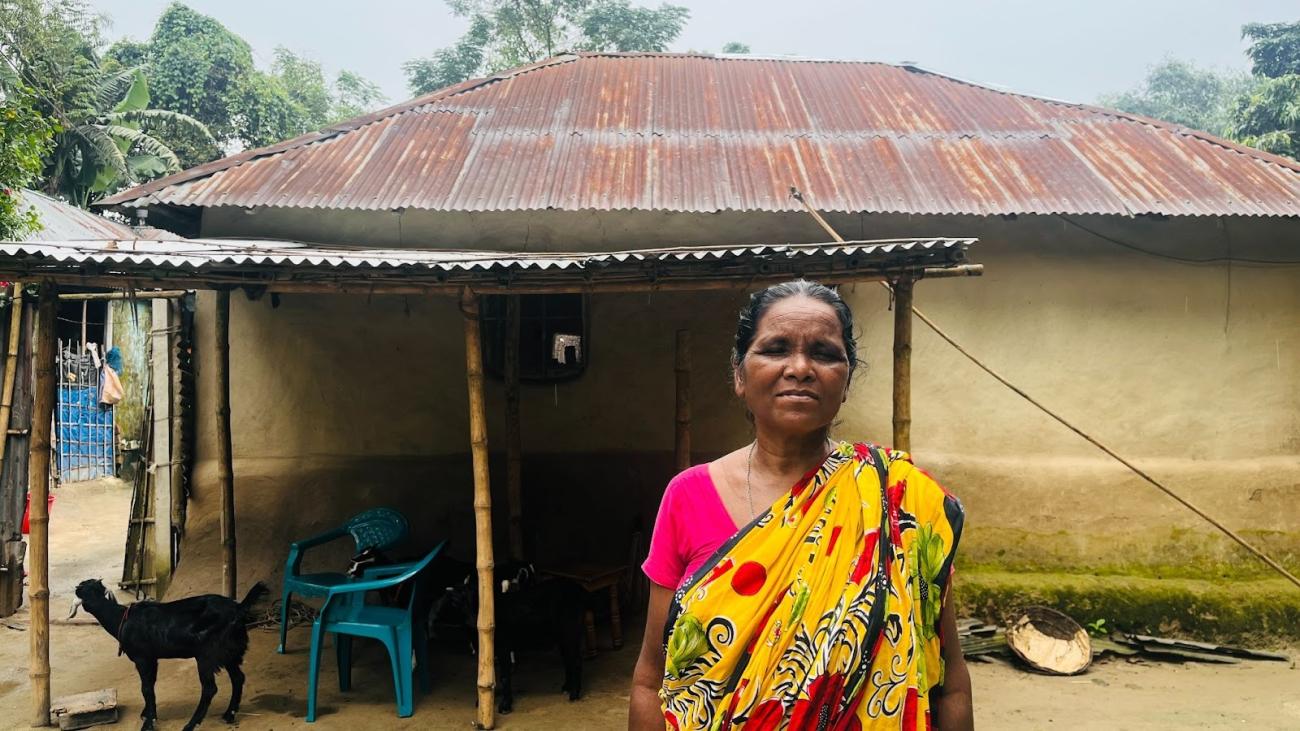
Rani is an exception. While overcoming the grief of losing her husband, she has managed the household and agricultural work, raising cows and goats to ensure higher education for her children. She spends 20,000 taka ($164 USD) for their education every month, which is equivalent to the monthly salary of a high level government employee in Bangladesh.
In the last year, she built a house with her own income from raising and selling goats and cows. Now she is dreaming of her daughter being admitted to university, and hopes that her son, who is finishing his studies at the polytechnic, will ease her burden.
Drivers of Economic Growth
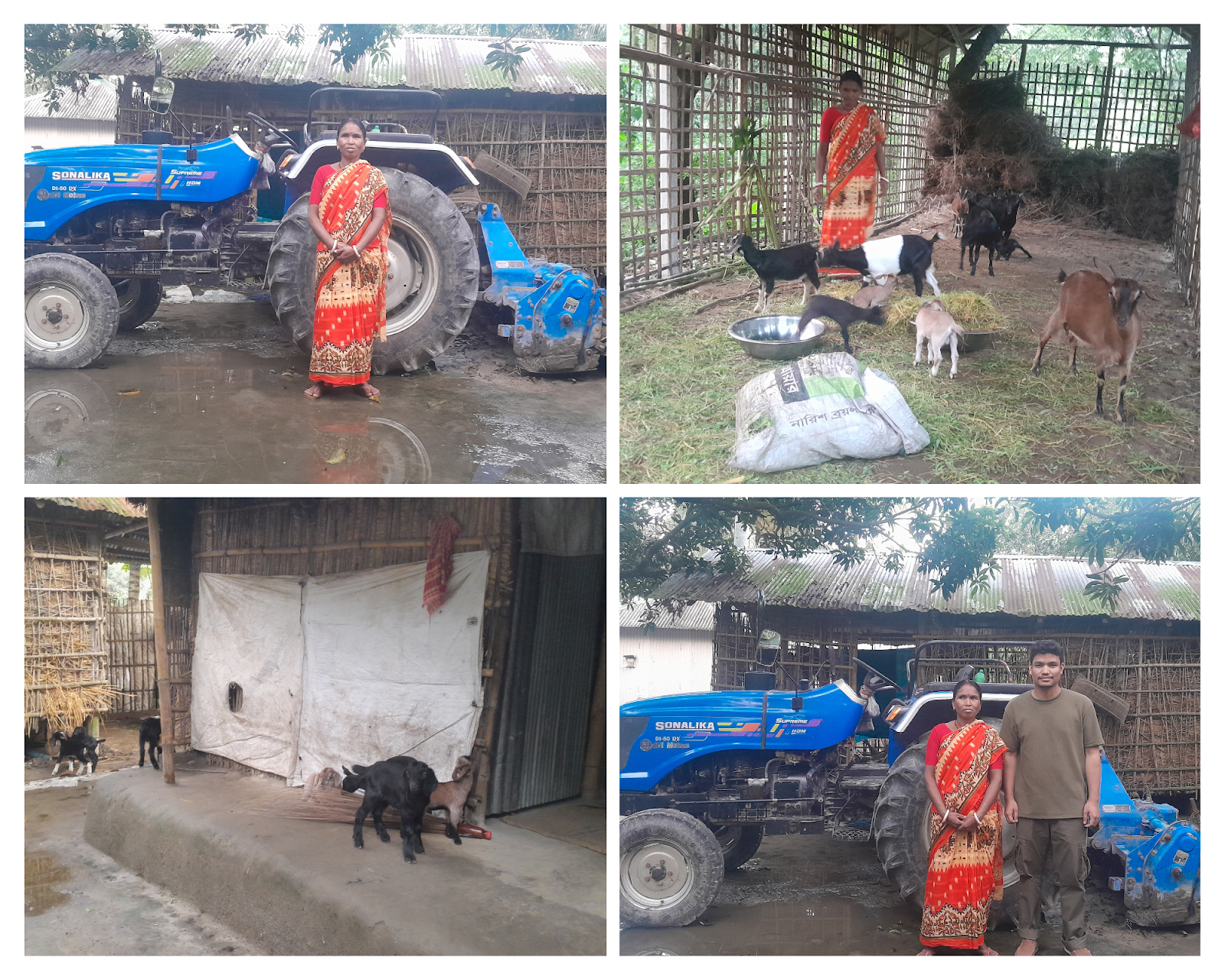
Soti Rani provided half of the money needed to purchase a tractor.
Beyond household management and childcare, the Indigenous women of Bangladesh are driving economic growth in ways that often go unrecognized. Soti Rani (Koch-Rajbangshi) lives in Jholjholi village in Thakurgaon district, where she is currently raising 16 goats and 3 cows. Raising livestock enabled her to contribute half of the money needed to purchase a tractor. "I raise and care for cows and goats. When there are financial difficulties, my husband sells them to use the money for work," she explains. She also bears the educational expenses of her son, who is in Dinajpur, and dreams that he will later attend university.
Similarly, Deepika Rani (Koch-Rajbangshi), is knitting handicrafts to make fishing tools called tepay. Through such efforts, women are strengthening the rural economy and contributing equally to the men.
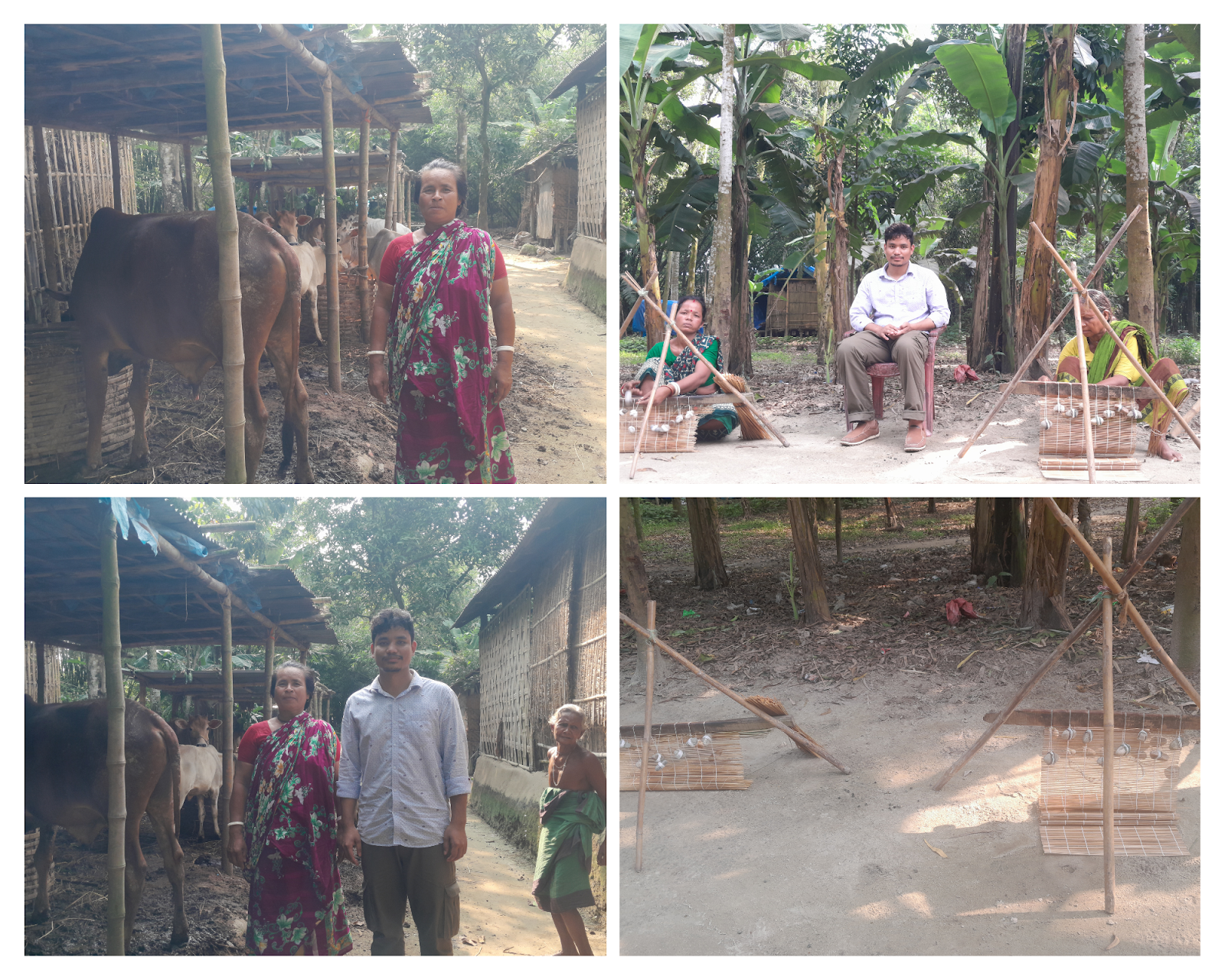
Deepika Rani (Koch-Rajbangshi) with her cows.
Despite their economic contributions and leadership roles, however, educational opportunities remain limited for Indigenous women. According to the 2022 census, the overall literacy rate in Thakurgaon district is 53%. Among women, it is significantly lower, and for Indigenous women, it is even lower. During visits to two Oraon villages with 83 families and a Santal village, there was not a single university student to be found.
Although these women contribute economically to their families and take part in leadership, very few have gone beyond the 10th grade. However, these mothers have begun to dream anew for their children. When asked whether they would educate their children, they replied firmly that no matter how much hardship they face, they would never compromise on their children's education.
Barriers to Advancement
Financial constraints, social superstitions, lack of employment and technical education, child brides, and the dowry system are all major problems of the socioeconomic advancement of women. Under the dowry system, for example, a substantial amount of money has to be given to the groom's family. The parents of poor Indigenous families must sell land and other properties to provide dowry, which further impoverishes them. (In the Oraon community, there is no dowry system.) Women clearly perceive dowry as harmful and want to end it.
Furthermore, the free movement of girls in educational institutions is not viewed favorably by many locals. Some are concerned about employment opportunities after education. Without prioritizing higher education, many parents opt to marry off their daughters when they are still young children. Various local organizations are working to address this situation.
Indigenous Women’s Demands
Rita Soren (Santal) is deeply concerned about the gradual loss of the Santal language and hopes the government will take steps to prevent its extinction. Toppo has similarly expressed concern about the loss of the Oraon language. She has submitted several memorandums to the government for the establishment of a Cultural Academy, which remains to be implemented.
Toppo and other Indigenous women have urged the government and development partners to expand short-term training projects, increase opportunities for government jobs, organize various events to preserve the language and culture, and increase the rate of inclusion of Indigenous youth in government projects to develop their skills. In the era of the Fourth Industrial Revolution, Indigenous women believe that their empowerment is the key to the overall development of Bangladesh.
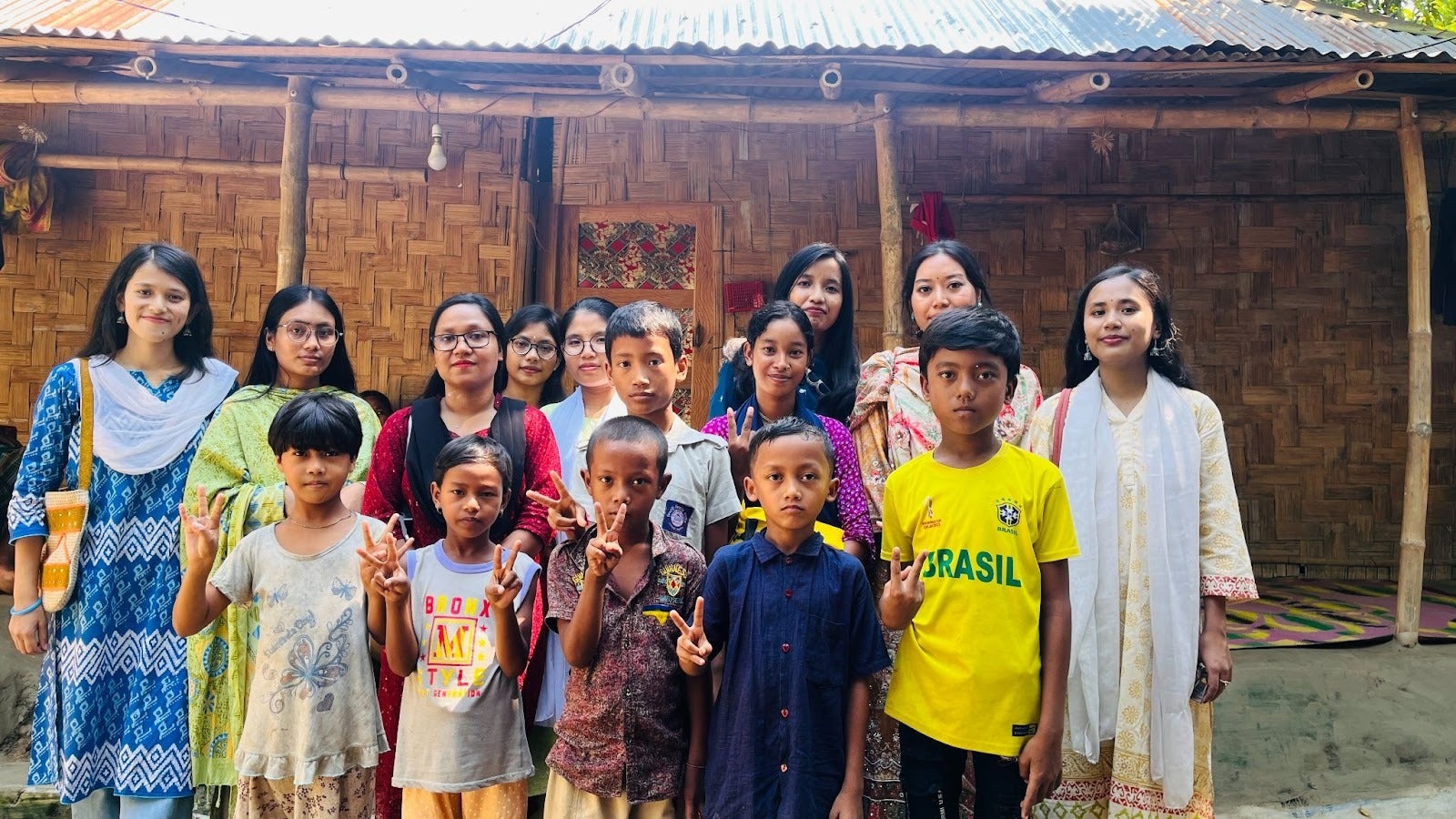
During the Durga Puja holiday, leaders of Movement Against Dowry visit their school.
Movement Against Dowry, A Light of Hope
Dowry has become a curse for Indigenous girls. Movement Against Dowry is a young women-led platform that is working at the grassroots level to reduce dowry and change the mindset of those who demand it. Priya Rani, a 23-year-old university student, is the head of it. She explains, "In patriarchal society, male dominance in most professions has encouraged the social and economic devaluation of women, resulting in practices such as the dowry system. Our goal is to create an enabling and equitable environment where women can actively participate and contribute to society as researchers, technologists, doctors, journalists, teachers, social workers, nurses, and professionals across diverse fields."
Movement Against Dowry conducts educational awareness campaigns, implements field-level projects focusing on empowering underprivileged girls of the society, counsels more than 200 girls every month over the phone, and operates a small school to support girls who lost their fathers at an early age and want to pursue higher education. It started with four members; now they are 22. The organization was founded through the dedication and collective efforts of young Indigenous women university students, who continue to work tirelessly to address the existing challenges faced by women and to create employment through education.
The plainland Indigenous women of Thakurgaon are rewriting their own narratives. From Toppo's three decades of cultural preservation to Prava Rani's determination to educate her children despite widowhood; from Soti Rani's economic partnership in purchasing a tractor to Priya Rani's Movement Against Dowry, these women are building a future where their contributions are no longer silent. Their struggles continue, but so does their resistance. They are not just surviving—they are leading, earning, educating, and transforming their communities, one generation at a time.
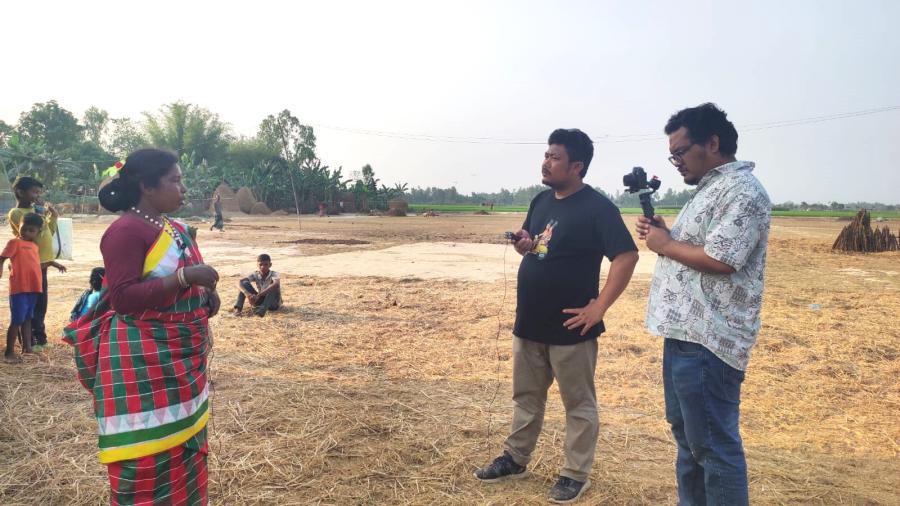
Top photo: Nayami Toppo (Oraon), President of Thakurgaon Mission Cooperative Credit Union, has been a leader in her community for over 30 years.