By Maya Lazzaro (Quechua, CS Staff)
In September 2025, Cultural Survival staff visited the Sierra Nevada, a coastal mountain range and the origin site of the northern Caribbean coastal Colombia's headwaters, an important water source in the area. The source of 36 rivers, it is known and revered for its pico, the snowcapped mountain peak. The Sierra is home to Tairona culture, which includes the Arhuaco, Kogui, Wiwa, and Kankuamo Peoples who live in resguardos Indigenas (Indigenous reserves). We were looking for new artists to involve in the Cultural Survival Bazaars. We spent the most time with the Arhuaco Peoples, but within Bogota, we met several Wiwa and Kankuamo people, as they often vend their artisanal products along the cement sidewalks.
Across many communities I’ve visited, people have talked of “the one who walks with plants,” and sometimes more specifically, “the one who walks with tabaco (tobacco).” I have dedicated parts of my life to that walk before I consciously knew that was what I was doing; walking with tobacco in my bundle and sharing it with fires and Peoples across Indigenous territories that I have had the honor of being invited to. In its profound meaning, this is the work and the walk that Cultural Survival dedicates itself to. The more I yearned for and have walked in the direction of this holy task, the fewer photographs I took. Sometimes, and more often than not, instead of writing down what I saw and heard, I began to share stories and my encounters over fireplaces and meals. However, I recently realized that this is part of our duty and obligation to intentionally and carefully document and share information about the Indigenous communities and Peoples that continue to live on their ancestral lands. They are the ones taking care of the biodiversity and the essence of the world as our ancestors left it and intended for us to enjoy.
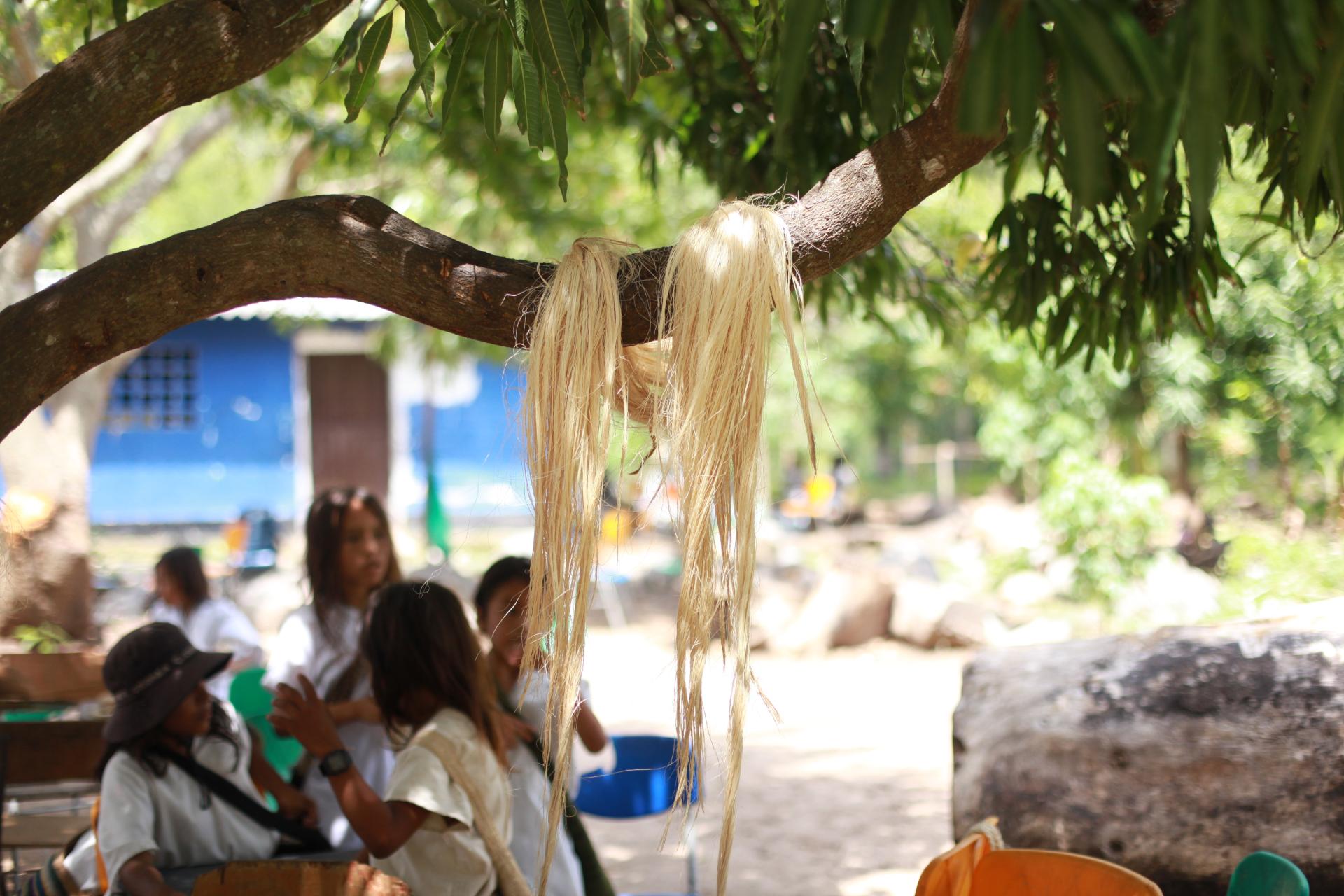
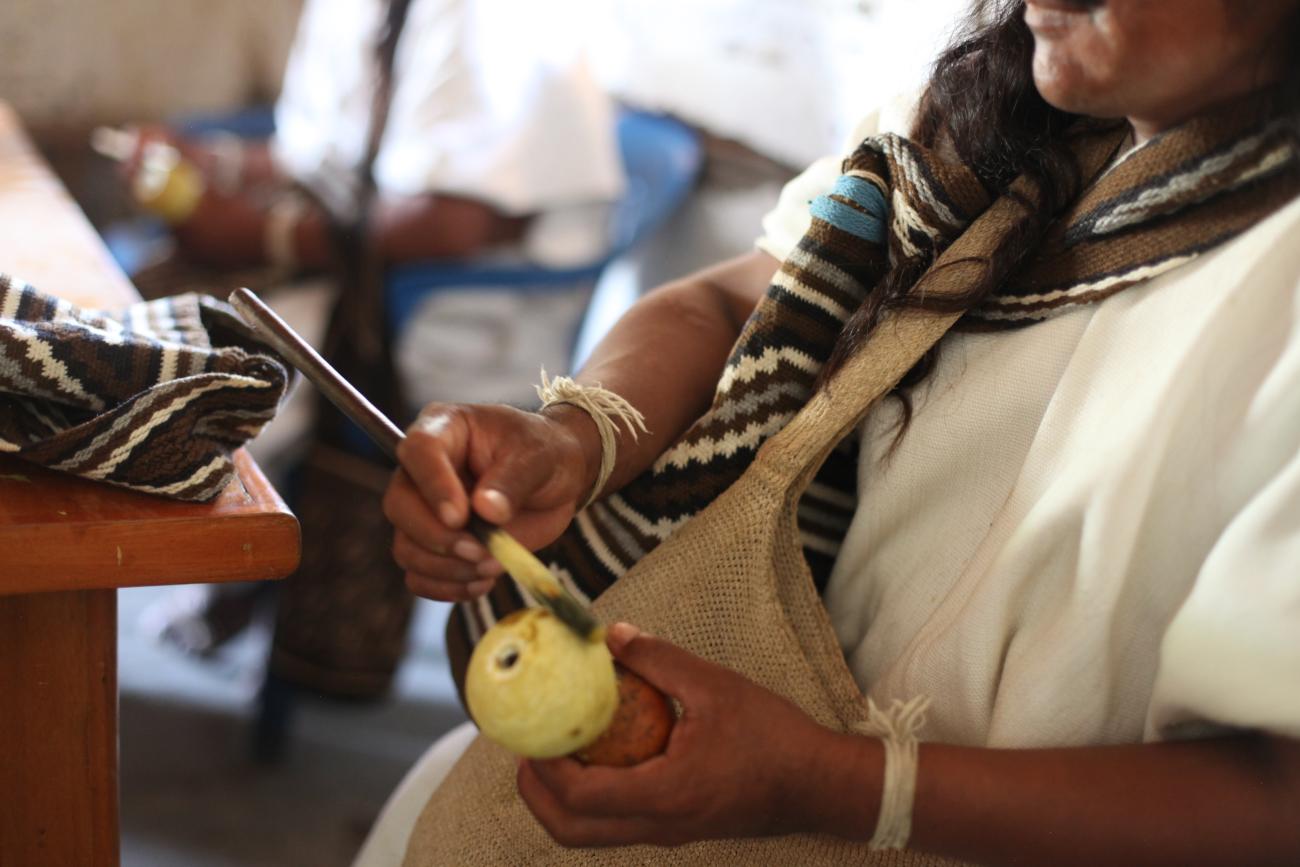
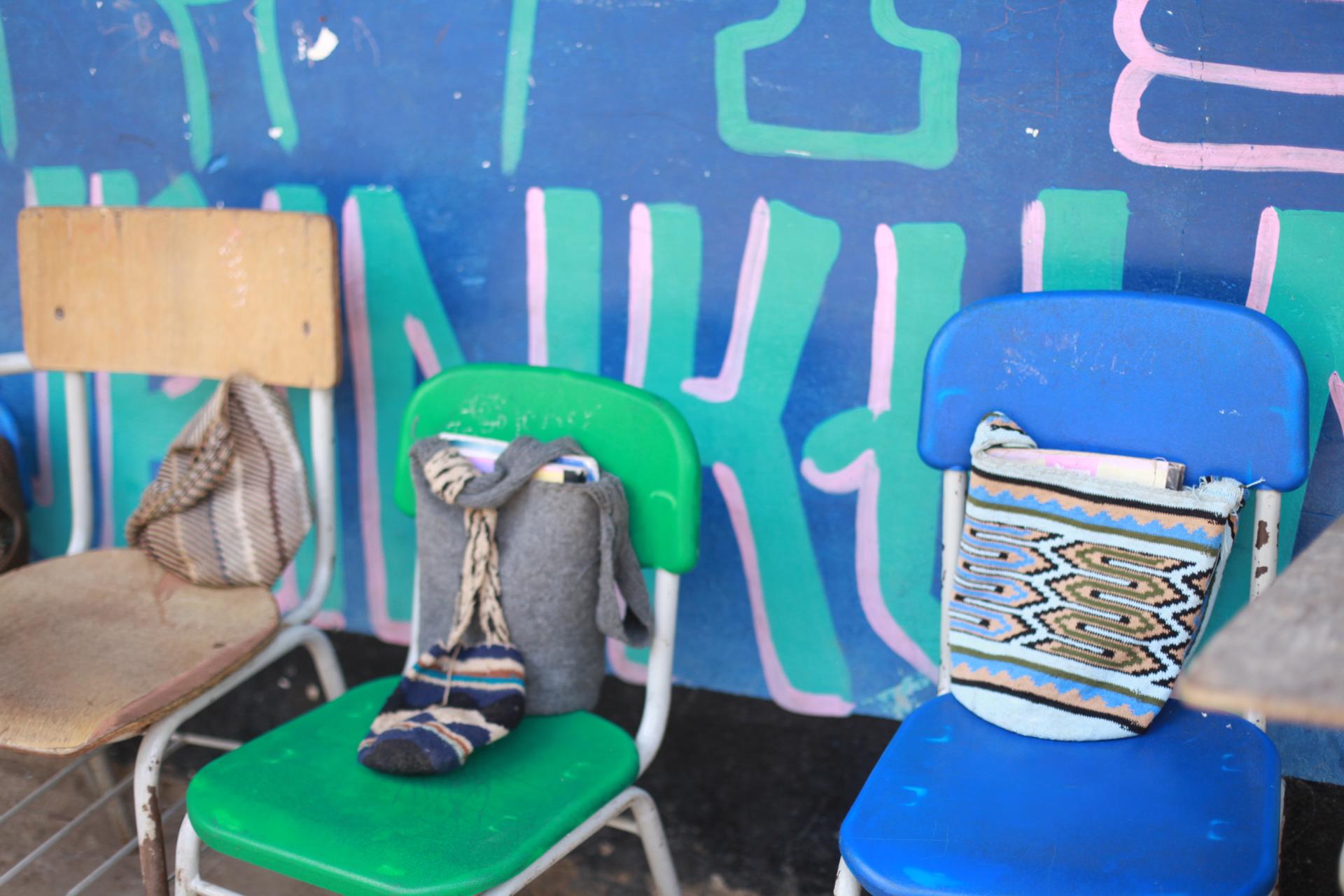
Cultural Survival has a primary vision: to advocate for and advance the rights and cultures of Indigenous Peoples. The dances, gastronomy, agriculture, ceremonies, weavings, adornments, and jewelry—all of this is not only our history—it is our present, and it is our future. At every single place I have come to understand there is an undeniable truth: the children of these places hold the knowledge that is sought across societies. There is a silence that is yearned for and a laughter that needs to be taken care of and heard. As we were welcomed into Arhuaco territory and communities, what struck me the most was how every single child in these communities had a mochila (the traditional bag they weave from wool) in one hand and a spinning tool in the other. Children are learning to weave as they learn to function and coexist in their societies and with one another. In the community of Ikū, where we were welcomed for two days for site visits, children learn to weave their mochilas while also learning math, reading, and writing. There is an understanding that weaving our thoughts is fundamental to our human capacity to retain knowledge, learn, express, and think for ourselves.
There is no direct translation for ‘thank you’ in many of the Indigenous languages I’ve come across; our gratitude is often expressed through actions and gestures of generosity. More often than not, when you visit an Indigenous community or home, you are given a gift, because a visitor is considered a blessing in many cultures. The one who walks with tobacco, whether they bring it to share or to put into the fireplaces they encounter, is visiting to pray for the people and families they have met along the road. Cultural Survival’s site visits enable us to become better advocates for the rights and cultures of Indigenous Peoples, identifying where our support is needed so we can advance and uplift the brilliance that already exists in these communities.
In the Arhuaco territory, the children's mochilas are as important as the notebooks given to a schoolchild. A sign painted by the schoolchildren, hanging above their library door, reads: “We are born to take care of the world, not to destroy it.”