By Pete Westover
Successful stories of land return and rematriation are accumulating as Tribes and Indigenous organizations continue their struggle to regain their historic homelands. Hundreds of cases assembled by the Landback Movement, the Indian Land Tenure Foundation (ILTF), Indigenous land trusts, Indian Country Today, Cultural Survival, and other media, allied organizations like the Trust for Public Land and the Conservation Fund, and others illustrate a variety of creative approaches to reversing centuries of land loss and addressing the need for collaborative land stewardship. With support from the Landback Movement, ILTF, the Five College Native American and Indigenous Studies Program at Amherst College, and Cultural Survival, the aim is to assemble a comprehensive digital story map of nearly 300 projects, to be made available to Tribes and Nations across Turtle Island.
The examples included here briefly illustrate the most common categories of land transfer, which started with the Return of Blue Lake Bill, legislation enacted during President Nixon’s term that returned 48,000 acres to Taos Pueblo in 1970. These examples scratch the surface of a diverse record of land return projects—a drop in the bucket compared to what still needs to be returned, rematriated, and reclaimed.
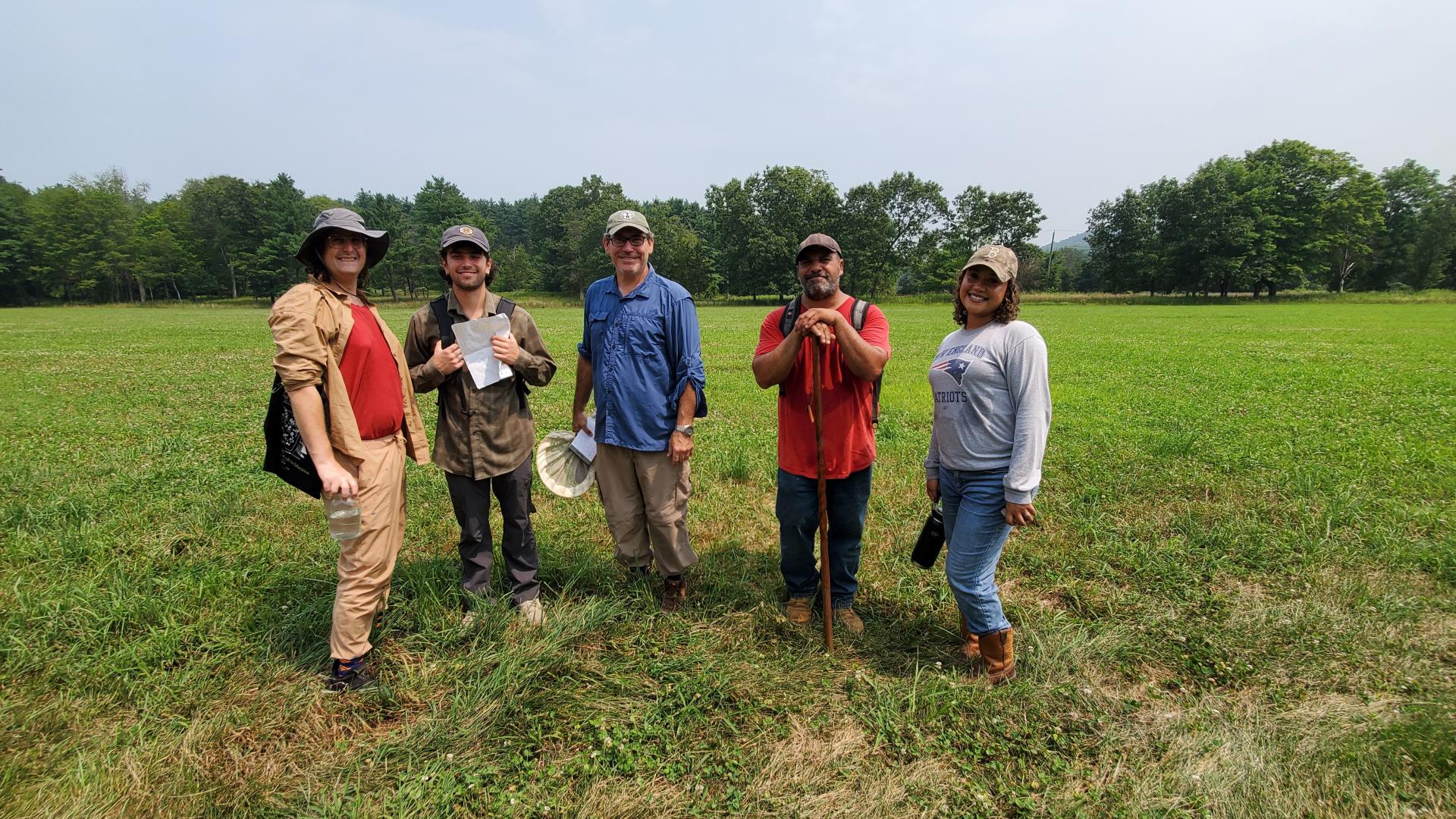
The Stewardship Crew of the Hassanamisco Band of Nipmuc Indians with pollinator expert Dr. Robert Gegear (center) at the 503-acre Nipmuc property in Sunderland and Leverett, MA.
Outright Gifts of Land
Massachusetts: In 2024, the W.D. Cowls, Inc. Land Company gifted 503 acres of forest land on Mount Toby, which rises above the Connecticut River, to the Hassanamisco Nipmuc Band, who plan long-term stewardship of its diverse wildlife. State funds from the Municipal Vulnerability Preparedness (MVP) program for climate resilience covered the cost of a full ecological and wildlife survey of the property. The purchase of an additional nearby 488 acres from Cowls, with another round of MVP funding, is in the planning stage.
South Dakota: In 2018, the Rosebud Sioux Tribe received more than 500 acres of land from the St. Francis Mission. The land, comprising a collection of scattered parcels, helps fill the 900,000 acres of the Rosebud Reservation, which borders Nebraska and the Missouri River.
Maine: As related by First Light Learning Journey, the 2022 return of 735 acres to the Penobscot Nation is a beautiful example of what Tribal members working together with Mainers looks like and what it does for the land. Working with First Light, Lucas St. Clair of the Elliotsville Foundation learned about the histories of what has happened, and continues to happen, to Wabanaki Peoples and their land. He wanted to use his platform to inspire, empower, and restore Indigenous people as caretakers of the land. “What we hope to do by giving this land back is to show our confidence in the Wabanaki communities in Maine and the Penobscots as a sovereign Nation that they will take on the responsibility to steward this land,” St. Clair said.
Fee Purchases
California: In 2024, the Hoopa Valley Tribe re-acquired 10,395 acres of land, expanding their landholdings to over 102,000 acres. The addition of the Hoopa Mountain property, which was taken from Hoopa control during the creation of the Hoopa Valley Indian Reservation, involved a $14.1 million purchase aimed at restoring rightful management, conservation, and use of the land to the Hoopa People.
Virginia: In 2022, four years after the Chickahominy Tribe received federal recognition, some of its traditional lands were back under Tribal control. The Chickahominy Tribe, based near Richmond, Virginia, purchased the land known as Mamanahunt along the Chickahominy River using $3.5 million in funds from outgoing Gov. Ralph Northam’s budget. “It’s once-in-a-lifetime,” Chickahominy Chief Stephen Adkins said. “Since the mid-17th century, we have had a footprint on the Chickahominy River.” Having the land under Tribal control provides opportunities for cultural preservation and interpretation, and gives them a place to re-inter remains taken during archaeological digs.
California: In 2021, 2,424 acres of privately-owned, culturally and ecologically significant timberlands in Northern California were purchased by the Yurok Tribe for permanent ownership. The return of this significant forest area to the Tribe’s ownership is the result of a unique partnership by the Yurok Tribe with the investment firm New Forests, which acquired the land in 2016 on behalf of institutional investors, and The Trust for Public Land, which supported the Tribe in accessing funds from the California State Resources Agency to finance the purchase. For centuries, the Yurok Tribe has resided in this part of the state and holistically manages more than 75,000 acres of forest along the Klamath River. With 6,311 enrolled members, the Yurok Tribe is California's largest federally recognized Tribe. Over the past decade, the Yurok Tribe has successfully reclaimed a portion of its original lands. It is now actively engaged in multiple forest rehabilitation projects on the recently acquired properties. The site, located in the Ke’pel Creek watershed, holds immense biological and cultural value.
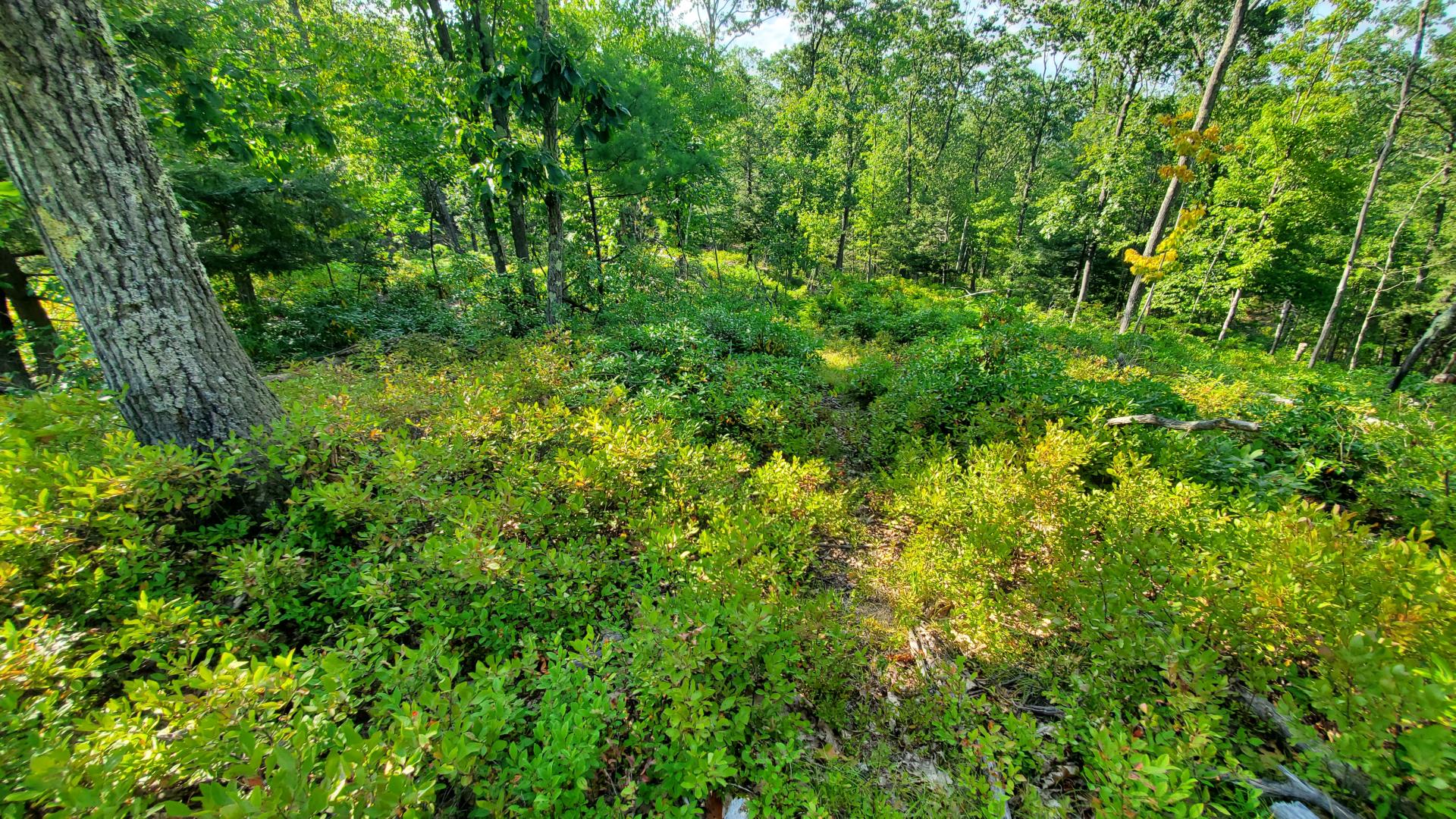
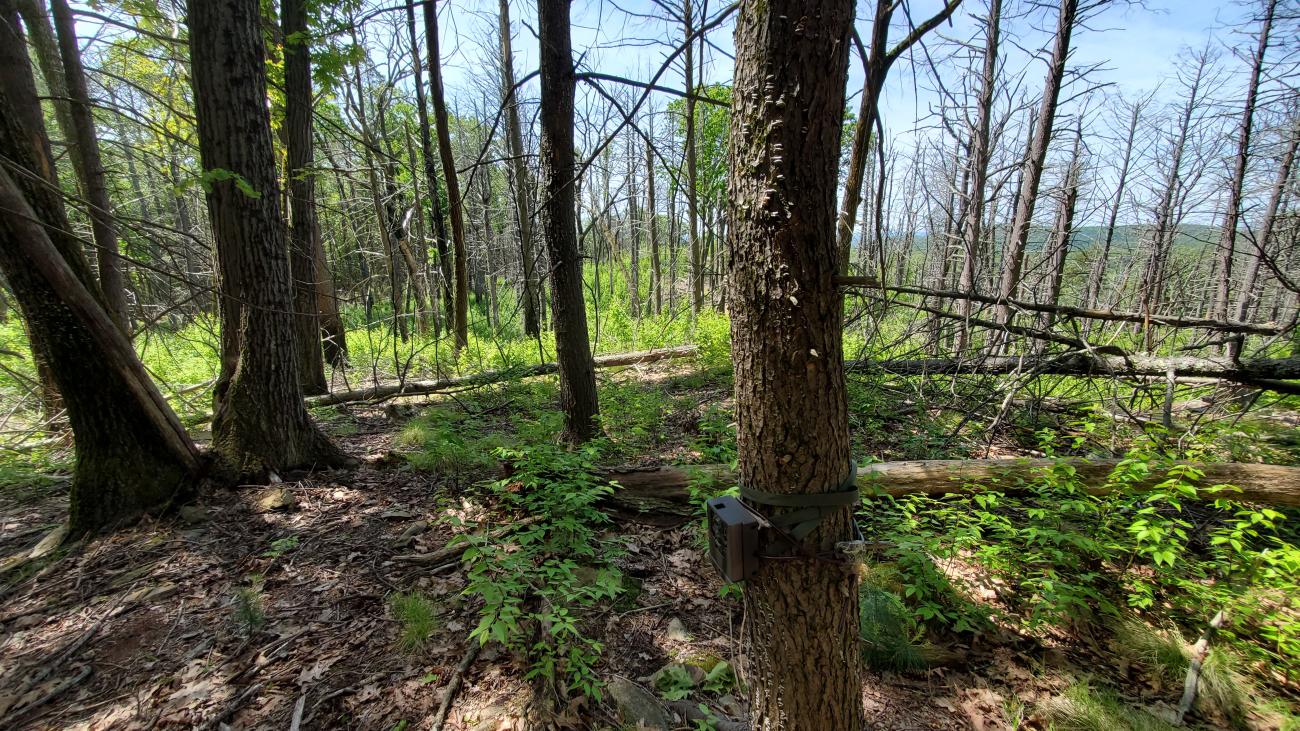
A natural heath bald on Joshua Hill in Leverett, MA, will be the subject of restoration efforts with guidance from the Massachusetts Natural Heritage and Endangered Species office.
Land Deals Coordinated by Indigenous Land Trusts
Michigan: The Little Traverse Bay Bands of Odawa Indians established the Little Traverse Conservancy in 1972, which now holds more than 200 conservation easements protecting more than 18,000 acres.
Massachusetts: Aquinnah Circle comprises 3.3 acres overlooking the Gay Head Cliffs of Martha’s Vineyard. The property includes the iconic Aquinnah Restaurant and Shop, a restaurant that has been operated exclusively by Aquinnah Wampanoag for more than 60 years, and open space land connecting the property to the Aquinnah Cultural Center. The open space land is filled with natural vegetation, consisting of bayberry, Rosa rugosa, sweet pepperbush, and other shoreline species. A small portion of the site includes the clay cliffs. In August 2023, the Native Land Conservancy purchased the site as a temporary caretaker until the newly formed Aquinnah Land Initiative fundraises the purchase price.
Government Land Transfers
Minnesota: As recorded in Ojibweinaajimowin as far back as history records prove, Mille Lacs Band members have always occupied a section of land in Cove. However, the state incorrectly designated the land as state trust land. For more than four decades, Mille Lacs Band citizens have advocated for the return of this parcel of land inside the reservation boundary. In 2025, state lawmakers passed legislation that will formally return 18 acres of land from the State of Minnesota “in line with the larger global landback movement.” The re-acquisition of land to the Mille Lacs Band was one of several land back proposals introduced during the last legislative session.
California: The State of California has agreed to return 2,800 acres of the Shasta Indian Nation's original homeland, which was flooded by a series of hydroelectric dams more than a century ago.
Nebraska: Congress has approved the transfer of 1,600 acres of land along the Missouri River for the Winnebago Tribe that the federal government acquired through eminent domain in 1970 for a similar hydroelectric project.
Montana: The U.S. Department of the Interior returned 18,800 acres of land in 2021 to the Confederated Salish and Kootenai Tribes of the Flathead Reservation in Montana. The lands, closely related to the National Bison Range, were already in the bounds of the reservation and are now being restored to Tribal leadership.
Cultural Respect Agreements and Other Means Short of Outright Fee Transfers
Delaware: The Nanticoke People reacquired 30 acres of land adjacent to John J. Williams Highway near Rosedale Beach in Millsboro in 2021, and the Lenape People are expected to close early next year on a deal for 11 acres near Fork Branch Nature Preserve in Dover. The land deals are partnerships between the Native Peoples, the nonprofit Conservation Fund, the State of Delaware, and the privately run nonprofit Mt. Cuba Center. The lands will be held under conservation easements with the state so they can’t be developed into housing, according to officials with the Conservation Fund.
Washington: As reported in the book “Trust in the Land: New Directions in Tribal Conservation,” the Jamestown S’Klallam Tribe has acquired more than 200 acres of both fee and trust land and uses conservation easements in collaboration with the nonprofit North Olympic Land Trust. In 2008, the Tribe also collaborated with the nonprofit Jefferson Land Trust to protect Tamanowas Rock, a significant sacred site for the S’Klallam Bands, including the Jamestown S’Klallam, Elwha, and Port Gamble S’Klallam.
Management or Creation of Indigenous Parks and Monuments
Arizona: As reported by the Native American Rights Fund in 2024, the Havasupai Tribe, Hopi Tribe, and the Navajo Nation are defending their role as co-managers of the Baaj Nwaavjo I'tah Kukveni (Ancestral Footprints of the Grand Canyon) National Monument against a lawsuit filed by the state. The sovereign Tribal Nations serve as co-managers of the portions of their homelands protected within the national monument named in honor of their ancestral connection to the land.
Washington: The Nisqually Indian Tribe of the Nisqually Reservation has been working with the Washington State Parks agency to plan and develop Nisqually State Park since 2008, collaboratively. Nisqually State Park encompasses lands that hold deep significance in Tribal history and culture, and are the historic homelands of the Squalli-Absch People. In 2014, the Tribe signed a Memorandum of Understanding with the Washington State Parks Commission to cooperate and partner in the development of the Park. In the same year, the Tribe also purchased 217 acres of land within the park's long-term planning boundary.
Creation of Indigenous Coastal Reserves and Marine Sanctuaries
California: Three Native communities have designated the first-ever Indigenous Marine Stewardship Area in the U.S. The Tolowa Dee-ni’ Nation, Resighini Rancheria, and Cher-Ae Heights communities will co-steward approximately 700 square miles of ancestral ocean and coastal territories along the northern California coastline.
California: The Kashia Coastal Reserve Property comprises 678.2 acres, which were purchased from a private owner in 2015 by the Trust for Public Land. The Trust subsequently transferred the property to the Kashia Band of Pomo Indians of the Stewarts Point Rancheria for stewardship. The Save the Redwoods League and Sonoma County Parks hold additional conservation easements.
Inter-Tribal Collaborations
California: In 2022, the descendants of Tribes on the northern California coast began reclaiming part of their ancestral homeland, including ancient redwoods that have stood since their forebears walked the land. The Save the Redwoods League, a nonprofit conservation group, recently announced that it is transferring more than 500 acres on the Lost Coast to the Inter-Tribal Sinkyone Wilderness Council. The group of 10 Tribes that have inhabited the area for thousands of years will be responsible for protecting the land, dubbed Tc’ih-Léh-Dûñ (Fish Run Place).
Stewardship Partnerships
California: Over the past two decades, the Amah Mutsun of the Ohlone Peoples have established partnerships with federal, state, and local agencies, major universities, and several land trusts and conservation organizations to steward thousands of acres of ancestral land by restoring and applying their Traditional Ecological Knowledge, gained over 10,000 years of Indigenous presence.
Creation of Community Forests
North Carolina: In 2012, the Eastern Band of Cherokee Indians received $302,305 in funding through the USDA Community Forest Program to purchase Hall Mountain, a 108-acre parcel of forested land on the Little Tennessee River that holds significant cultural and historical value for the Tribe.
Other Indigenous Community Forests have been established by the Kalispel Indian Community of the Kalispel Reservation in Washington and the Eastern Band of Cherokee Indians in North Carolina, with support from First Nations and grants from the Community Forest Program.
Court-Ordered Land Transfers
California: In 2021, the Pit River Tribe received 756 acres of its ancestral land back along Hat Creek in Shasta County. The land was returned to the Tribe as part of a court-ordered bankruptcy settlement against PG&E utility company, brought on by the company’s liability for the catastrophic Camp Fire.
There is a wide variety of land return approaches that have led to progress in restoring Indigenous relationships to land, water, language, and spiritual connections to historically Indigenous land. There is also, unfortunately, considerable resistance, not only from the fossil fuel industry, development interests, and government policy, but sometimes from predominantly white conservation organizations. Land transfers often come with conservation easements or other permanent limitations on Tribes’ ability to determine use, which are sometimes brought forward out of a fundamental mistrust or fear of Indigenous goals or stewardship capacity.
Ideally, Tribes and other parties working on land return will learn from and be inspired by the large reservoir of rematriation projects nationwide. For example, the Indian Land Tenure Foundation and the Landback Movement have compiled extensive information regarding a comprehensive collection of land return cases. Many entities can serve as partners in ongoing land-return efforts. Organizations such as First Light (Maine), the Native Land Conservancy (Massachusetts), Sogorea Te’ Land Trust (California), and the Intertribal Sinkyone Wilderness Council (California) are among those that have developed innovative collaborative efforts.
--Pete Westover is co-founder of Conservation Works, Valley Land Fund, and the Massachusetts Society of Municipal Conservation Professionals.
Top photo: Remote wildlife cameras have documented wildlife on a recent wildfire burn area as part of an ecological assessment of 488 acres in Leverett, MA, proposed as additions to Nipmuc land in the area.