Vivimos en una época en la que los desafíos para poder tener una expectativa razonable de un futuro positivo se acumulan rápidamente en nuestra contra. El clima se está desestabilizando. Los pocos restos sobrevivientes de paisajes nativos están desapareciendo. Estamos en un evento de extinción que ya amenaza a una cuarta parte de las especies de plantas y animales de la Tierra. Para nuestra propia especie, las enfermedades crónicas relacionadas con el estilo de vida son una epidemia creciente. En Estados Unidos, la esperanza de vida media está disminuyendo mientras que la desigualdad económica se dispara. Estos y otros desafíos empiezan a combinarse de maneras que casi pueden parecer ridículas. Por ejemplo, un planeta más cálido significa que todas y todos envejecemos más rápido. También significa que no solo las frutas y verduras son cada vez más difíciles de cultivar, sino también menos nutritivas. Todos estos desafíos están causados por la acción humana. Esto es frustrante, pero también puede ser una vía para la esperanza. Si nuestras propias decisiones están causando estos problemas, entonces la humanidad podría evitar muchos de ellos tomando decisiones diferentes.
Las comunidades Indígenas están sufriendo más que casi nadie por los desafíos del siglo XXI. Sin embargo, incluso allí hay esperanza, porque significa que existe el potencial de que la calidad de vida mejore radicalmente si logramos superar estos desafíos impuestos. En la raíz de muchos de los problemas más apremiantes de hoy, hay un desequilibrio en la relación entre las personas y la tierra. Las culturas tradicionales de las comunidades Indígenas son un antídoto. Están formadas por el conocimiento acumulado a lo largo de cientos de generaciones de experiencias reales de nuestras y nuestros ancestros, viviendo en estrecha relación con la tierra.
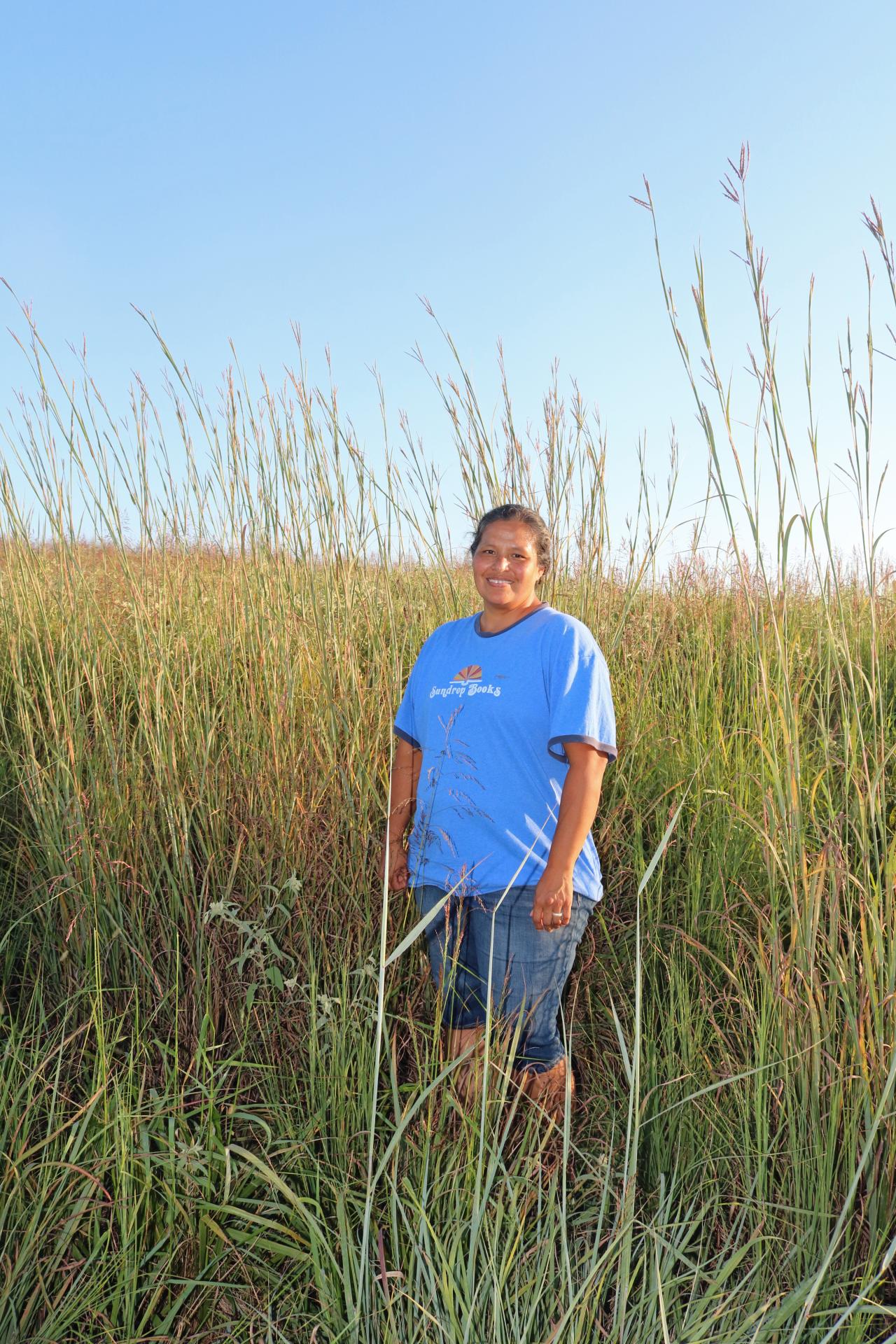
Amy Thompson.
En 2013, a Amy Thompson, mi esposa, le diagnosticaron una forma de diabetes. Ambos habíamos dedicado buena parte de nuestras vidas hasta ese momento a aprender y enseñar la cultura tradicional Choctaw. Su diagnóstico se convirtió en nuestra motivación para rehacer nuestra alimentación en torno a la dieta tradicional choctaw Indígena y otros alimentos nutricionalmente equivalentes. En un plazo de tres meses, entre los dos habíamos perdido 70 libras. El nivel de azúcar en sangre de Amy ya no se encontraba en el rango diabético. Teníamos más energía y nuestra calidad de vida mejoró. La cultura tradicional nos había ayudado. Hacer un cambio temporal es una cosa, pero es un desafío encontrar tiempo para comer de esta manera día tras día, año tras año. Sin embargo, el esfuerzo vale la pena, porque cada vez que nos apartamos de esta dieta, nuestra salud se resiente, y cada vez que volvemos a ella, mejora de inmediato.
Esta experiencia nos hizo avanzar más rápido en una dirección hacia la que ya nos dirigíamos: establecimos una pequeña granja familiar como un experimento práctico de cómo aplicar los conocimientos y las perspectivas de los modos de vida tradicionales Choctaw a las realidades y desafíos del siglo XXI. Además de proporcionarnos alimentos más saludables para nuestra mesa, sería una forma de aprender de primera mano sobre la cultura y la tierra que siempre habíamos querido conocer. También podría ser una oportunidad para aportar algo de posible valor a nuestra comunidad, además de nuestros trabajos diurnos para la Nación Choctaw. En 2015, solicitamos préstamos agrícolas y pedimos dinero prestado usando nuestros planes 401(k) para comprar un terreno de 160 acres cerca del corazón de la reserva y ponernos a trabajar. Lo llamamos Nan Awaya, que significa “Lugar de crecimiento” en lengua Choctaw. Este nombre hace referencia al lugar de creación Choctaw en la actual Misisipi. Nan Awaya Farm tiene cuatro objetivos principales: restaurar la diversidad nativa de la tierra que cuidamos, ayudar a revitalizar la cocina tradicional Choctaw saludable, contribuir a reconectar nuestra comunidad con la tierra y ayudar a dar nueva vida a la cultura Indígena Choctaw.
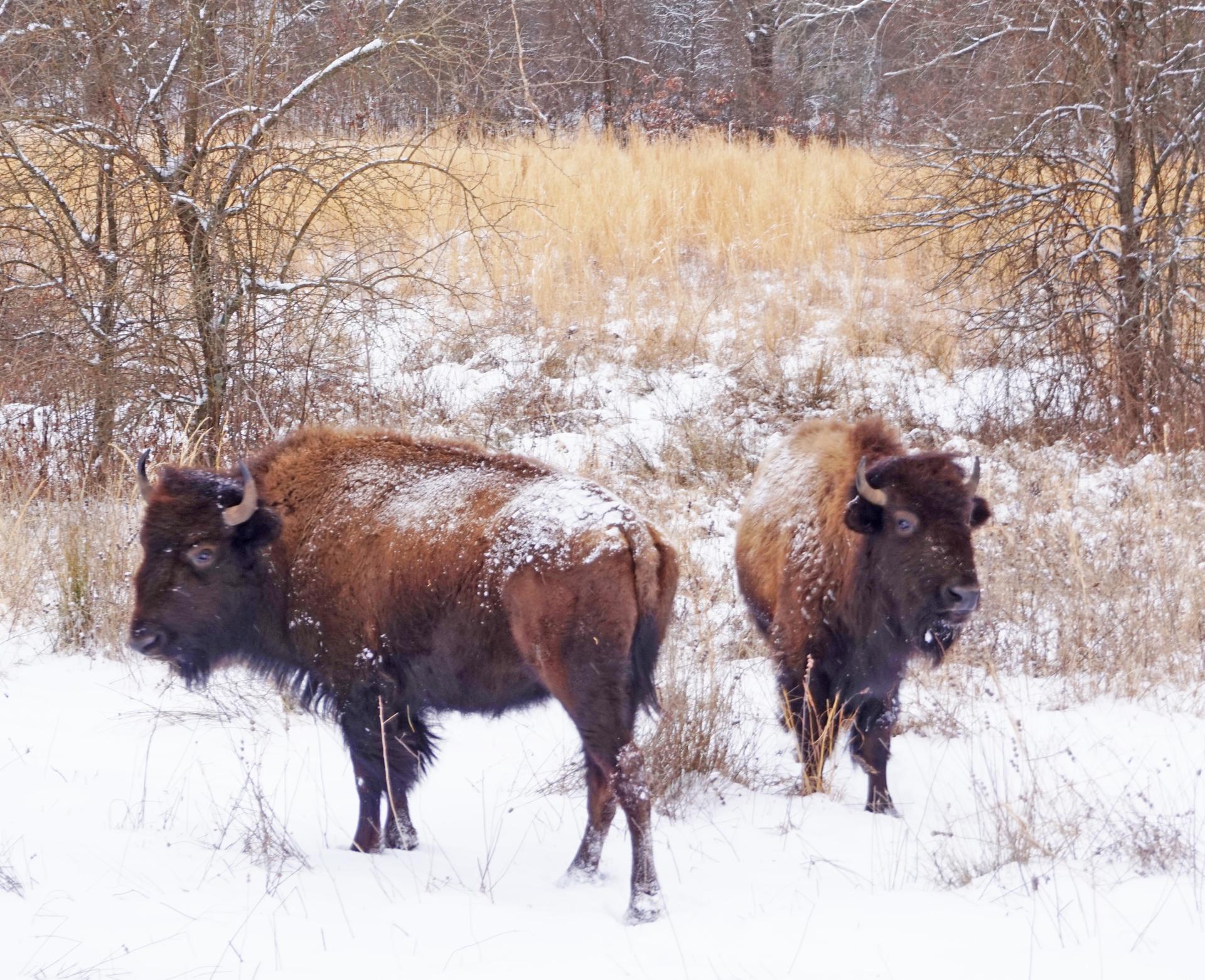
Dos hembras jóvenes de bisonte de dos años en la granja, en un raro día bajo cero. Sus pelajes son tan aislantes que la nieve que se acumula sobre sus lomos no se derrite.
El primer objetivo, restaurar la tierra, es la base de los demás. Cuando adquirimos esta granja, su situación era precaria, como la de buena parte del corazón agrícola estadounidense: había sufrido un exceso de pastoreo, tala y erosión. Al parecer nunca se había arado, de modo que muchas raíces y semillas nativas sobrevivían en el suelo. Dejamos que la tierra descansara durante un año mientras instalábamos cercas internas para introducir un pequeño rebaño de bisontes, una especie clave para esta región. Bajo la guía de un profesional, establecimos una rotación de pastoreo y una carga ganadera específicas, solo para descubrir que el ecosistema de pastizal alto nativo requiere períodos de descanso mucho más largos. Fuimos adaptando nuestra estrategia de pastoreo a medida que adquiríamos más conocimientos.
En unos pocos años, más de 200 especies de plantas nativas no leñosas brotaron a partir de lo que había sobrevivido en el suelo. La zona baja volvió a surgir como un humedal ácido, un tipo de hábitat local poco común. Las zonas altas reaparecieron como una sabana de pastos altos, pero aún carecían de algunas especies vegetales importantes que habían desaparecido por el pastoreo. Experimentamos con métodos para reintroducirlas sin dañar las plantas nativas que permanecían. Un método eficaz ha sido realizar quemas controladas y, después, esparcir sobre el suelo ennegrecido semillas recolectadas de los restos de praderas locales. Esto es aún más efectivo en los pastizales donde removemos, con una azada de jardín, parches de suelo de unos treinta centímetros de diámetro colocados estratégicamente y los plantamos como pequeños parches de jardín de pradera. Hasta ahora hemos plantado 11,161 de estos parches y seguimos contando. Aunque sigue siendo un trabajo en curso, el dinamismo nativo de este paisaje aumenta año tras año. En 2024, Nan Awaya Farm se convirtió en una de las aproximadamente 100 áreas naturales registradas por el Estado de Oklahoma.
Un paisaje nativo es un maestro en sí mismo. Vivir en uno (aunque esté en rehabilitación) proporciona una experiencia vital distinta a la de vivir en un paisaje rural domesticado. Recolectamos alimentos saludables a unos pasos de la puerta de casa: ciruelas silvestres, verduras de hoja, uvas muscadinas, sasafrás, caquis, arándanos y las moras más deliciosas del mundo. Hemos visto cómo las plantas nativas de los pastizales volvían a surgir poco a poco, para después explotar en una extraordinaria riqueza ecológica. Después, hemos observado, día tras día y durante años, los impactos interconectados de la lluvia, las sequías, los insectos, los bisontes y el fuego sobre esas plantas. El otoño pasado, hice un juego de arco y flechas tradicional choctaw con materiales recogidos en esta tierra y cacé un venado con una flecha de punta de piedra casi a la vista de nuestra casa. El sacrificio de ese animal nos proporcionó la mayor parte de nuestra carne durante meses. Procesamos las pieles de nuestros bisontes para convertirlas en mantos curtidos con el cerebro del propio animal, usando herramientas de piedra, y nos envolvemos en ellos en las noches frías, al sonido de las aves nocturnas. Esta tierra se ha convertido en uno de nuestros maestros más prolíficos. Como una persona anciana de la Tribu, a veces puede ser dura al mostrarnos cuánto nos queda por aprender, pero la tierra ha hecho más por nosotros de lo que nosotros hemos hecho por ella.
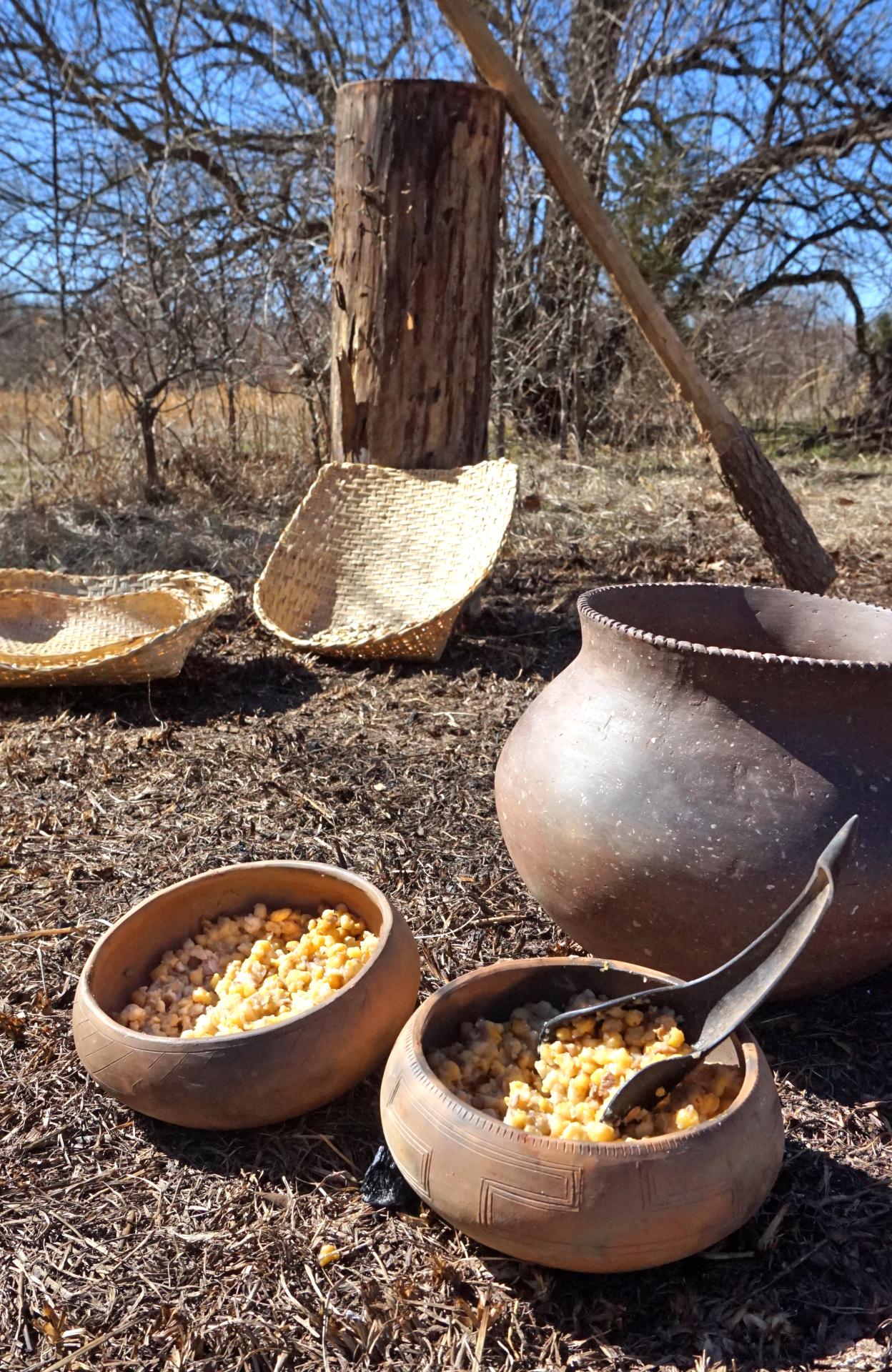
Tafula, un plato choctaw de maíz nixtamalizado, con la cerámica de barro, las canastas de caña de río y el mortero de madera que se usan tradicionalmente para preparar y servir el plato.
Conectar con la comunidad es tan vital como reconectar con la tierra. Como tenemos trabajos de tiempo completo en otros lugares, debemos ser estratégicos con la gestión del tiempo. La Tribu es una gran aliada al permitirnos compartir las experiencias de Nan Awaya Farm —como caminatas culturales para conocer plantas, charlas sobre bisontes, comida tradicional, talleres de tintes naturales y quemas tradicionales de cerámica— a través de programas tribales ya existentes. También hemos tenido el honor de acoger varias veces el campamento de inmersión Indígena de la Tribu. Choctaw Food es un libro de 400 páginas publicado por la Tribu que utiliza las tradiciones alimentarias Indígenas para compartir la rica historia y cultura de los Pueblos Choctaw, con el objetivo de su revitalización. La edición de 2025 incorpora muchas imágenes y reflexiones procedentes directamente del experimento de Nan Awaya Farm.
Nan Awaya Farm también tiene un sitio web y un blog que comparten cultura y experiencias de la granja con personas de todo el mundo. Conectar con personas de la comunidad Choctaw y de otros lugares que trabajan por un futuro mejor es uno de los resultados más valiosos del experimento de Nan Awaya Farm. Las culturas tradicionales de las comunidades Indígenas fueron desarrolladas, generación tras generación, por personas inteligentes y observadoras cuyas experiencias de vida fueron distintas a las de las sociedades dominantes del siglo XXI. Pueden ofrecer conocimientos probados por el tiempo para afrontar algunos de los desafíos más urgentes de hoy. Cada metro cuadrado de paisaje nativo, cada plato de comida Indígena, cada fragmento vivo de Conocimiento Tradicional que esta generación logre rescatar del borde del olvido y cada relación positiva que pueda transmitirse a la próxima generación son un regalo de un futuro mejor.
Ian Thompson (Choctaw and Euro-American), Ph.D., RPA, se desempeña como Oficial Tribal de Preservación Histórica de la Nación Choctaw de Oklahoma.
Imagen superior: Un tramo de la filtración arenosa de la granja en septiembre. Esta vista está dominada por girasoles de pantano, eucaliptos, hierva y eucalipto negro. Los paisajes están desapareciendo.
Todas las fotos son cortesía de Nan Awaya Farm.