
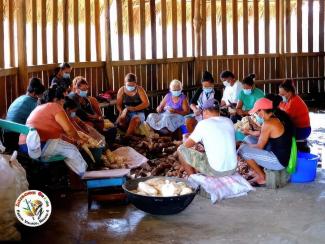
La yuca es uno de los últimos rituales vivos de la feminidad lokono. Más que alimento, es una práctica sagrada, sembrada, preparada y transmitida por las mujeres como un acto de memoria, supervivencia y continuidad cultural. El acto de pelar, rallar y hornear el pan de yuca es una forma de oración cultural, un puente tangible que enlaza las manos de las mujeres a través de generaciones.
En Pakuri (St. Cuthbert’s Mission), las mujeres han sostenido sus costumbres, su sabiduría del territorio y su resiliencia mediante el cultivo de yuca, la elaboración artesanal y otros actos silenciosos de cuidado. Estas son rutas de parentesco, senderos vivos entre generaciones, y se encuentran en el corazón de la soberanía alimentaria. Sin estos trabajos cotidianos, la columna espiritual y cultural de la comunidad se erosionaría.
Pakuri se ubica a orillas del río Mahaica, en Guyana, y es hogar de alrededor de 2,000 personas Lokono-Arawak. A solo 36 millas de la capital, es un mundo aparte: 240 millas cuadradas de frondoso bosque, sabana y paisaje ribereño, enclavados en el Escudo Guayanés, una de las formaciones geológicas más antiguas del planeta. Esta tierra, rebosante de jaguares, tapires y nutrias gigantes de río, representa tanto riqueza ecológica como archivo cultural: guarda memoria en el suelo, en los ríos y en las prácticas transmitidas de una generación a otra. “Me alegraría transmitir lo que mi abuela me enseñó. Ella fue una mujer que me enseñó a sembrar y a saber cuándo algo está listo. Soy la única que queda de mi generación... sigo viva y haciendo algo por mí misma”, dice la abuela Charlotte, una mayor de la comunidad de más de 80 años. Sus palabras no son nostalgia; son testimonio. Su quietud no es silencio: es trabajo. Es resistencia con forma de pan.
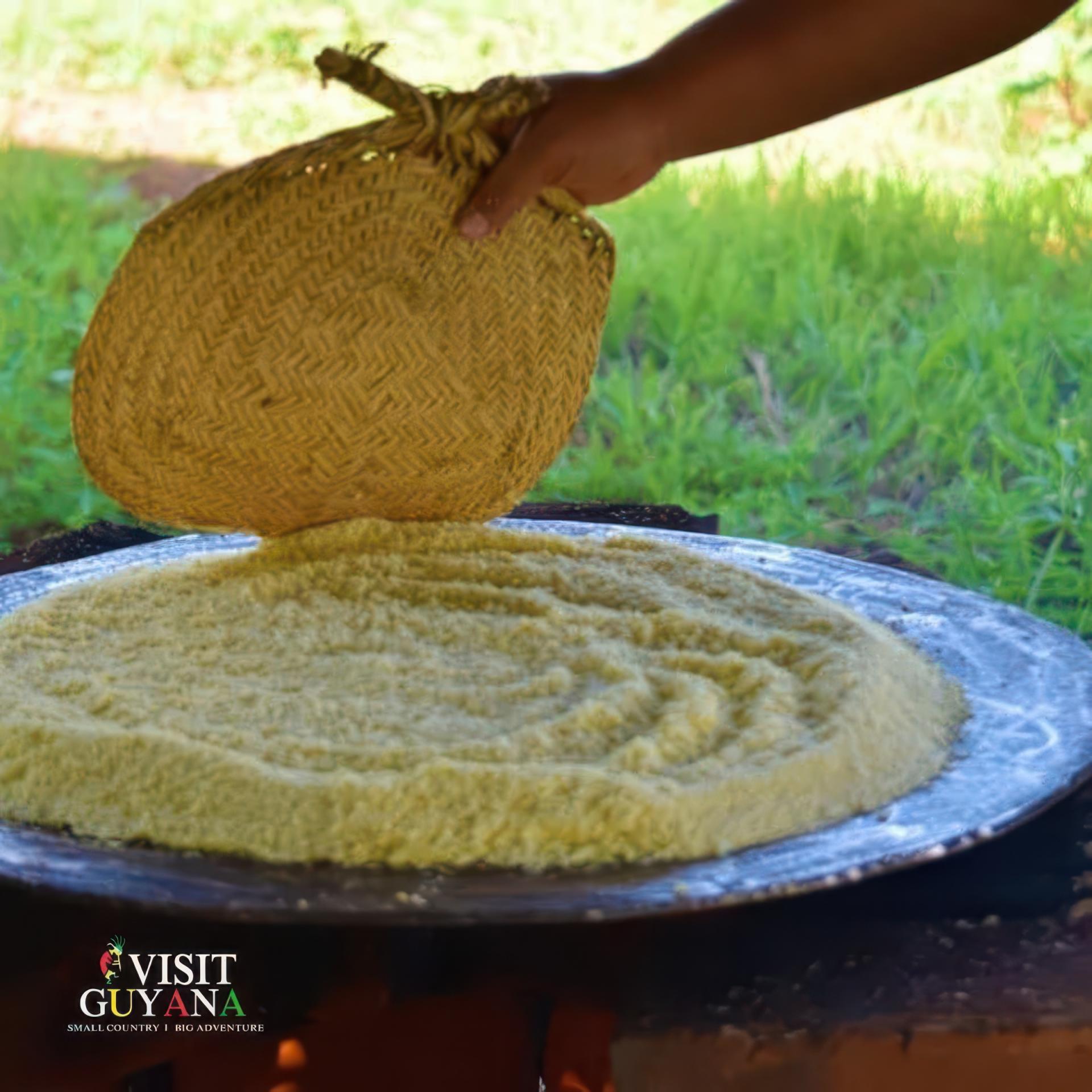
Formar gránulos de yuca directamente sobre una plancha caliente al fuego es un paso esencial para hacer pan de yuca. Foto de Visit Guyana.
Mai Lovine, otra mayor, subraya la urgencia de esa resistencia. “Aprendan a hacer pan de yuca, bebidas locales, farine (harina). Si no les enseñamos, morirá con nosotras”, suplica.
Para mujeres como Mai Lovine, el cultivo de yuca no se trataba solo de comida, sino de reciprocidad. “En esos tiempos, la gente compartía. Si yo horneaba pan de yuca y tú necesitabas, te lo daba. Ahora, todo es dinero”, dice. Su reflexión señala un cambio de valores: de la supervivencia comunitaria a la supervivencia individual, y los profundos costos culturales que ese giro conlleva.
En Pakuri, la yuca es más que un cultivo. Es memoria, linaje y herencia hecha tangible. Mientras el tejido y la cestería dejan artefactos visibles, la elaboración de yuca es efímera. Se consume, se digiere y, sin embargo, se renueva cada temporada. Ambas actividades guardan memoria en las manos de las mujeres, codificando la supervivencia y el cuidado en gestos repetidos a lo largo de siglos.
Como explica la tía Wendy, una mujer de la generación intermedia: “De la tierra se aprende muchísimo. Te alimenta, te cura, te enseña. Es como una terapia. Antes la gente no vendía; ibas, te sentabas, comías. Y luego, cuando producías algo, lo devolvías”.
Para ella y para otras, la yuca es un regalo del Creador. Porta ritual, espiritualidad y una forma de oración que ha perdurado incluso cuando otras ceremonias fueron reprimidas por la cristianización. A través de la yuca, la cosmovisión Lokono sobrevive en silencio, pero con fuerza, en las manos de las mujeres.
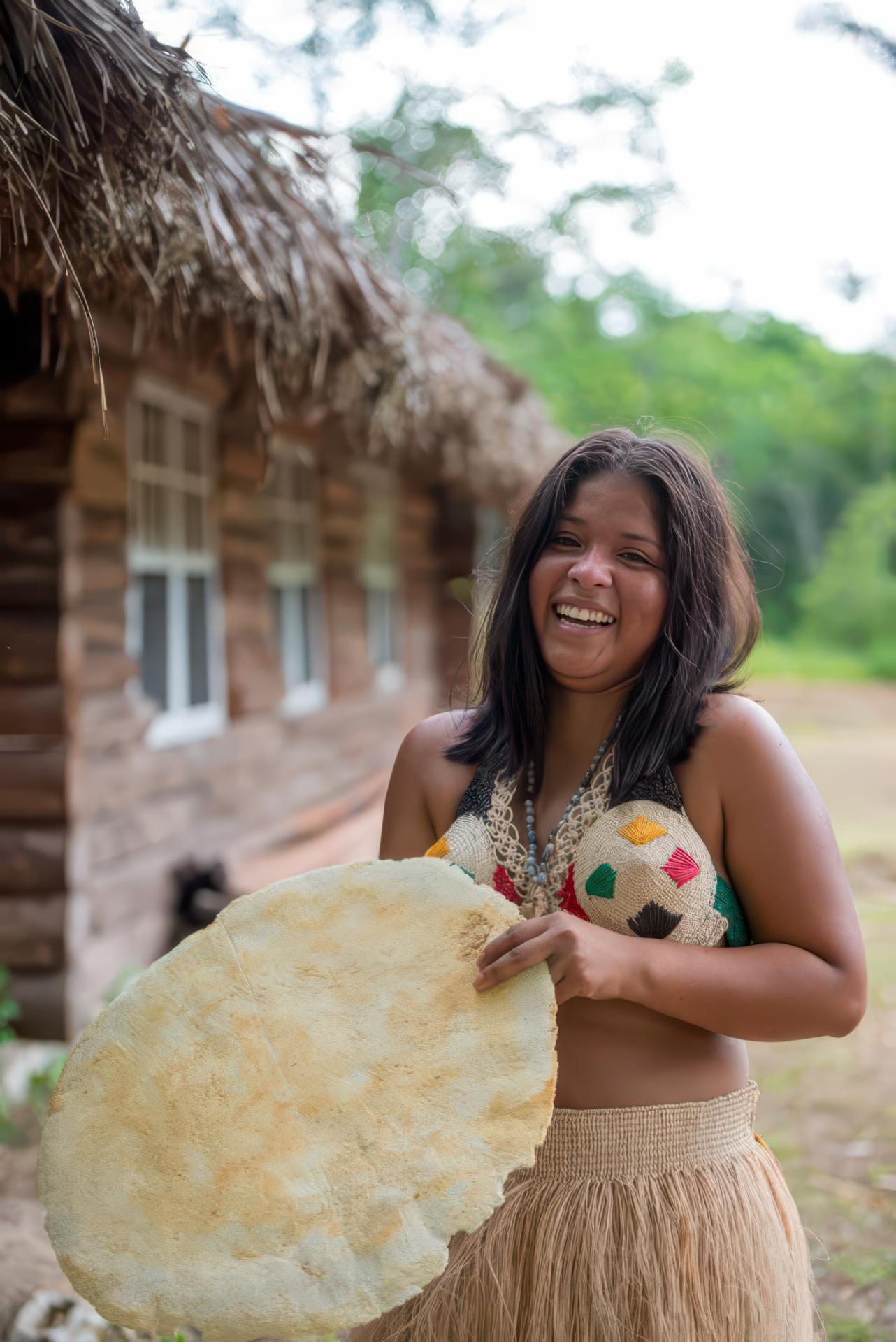
Una joven lokono en Pakuri sostiene un pan de yuca bellamente elaborado, con atuendo tradicional (regalia). Foto de DPI.
Recuerdo mis propios veranos de infancia, cuando mis abuelos nos pedían a mis primos y a mí que masticáramos la pulpa de yuca y la escupiéramos: un método tradicional para iniciar la fermentación del paiwari, una bebida sagrada. Como se creía que los dientes de las y los niños estaban libres de caries, se pensaba que eran adecuados para esta tarea ritual. Estos actos, que parecen pequeños, cargan el peso de la continuidad ancestral; son lecciones de pertenencia.
Los testimonios revelan un puente frágil, a veces fracturado, entre las personas mayores, la generación intermedia y las mujeres jóvenes. Las mayores, como la abuela Charlotte y Mai Lovine, hablan desde la experiencia vivida: del cultivo, la reciprocidad y la supervivencia en condiciones de dificultad. Sus voces son advertencias proféticas sobre lo que desaparecerá si sus enseñanzas no se transmiten.
La generación intermedia, representada por mujeres como la tía Wendy, carga tanto el conocimiento heredado como las realidades de una economía cambiante. Se mueve entre la memoria y la modernidad; recuerda una época en la que la comida se compartía libremente y lamenta la cultura mercantilizada de hoy.
Las mujeres jóvenes hablan desde un paisaje distinto, a menudo marcado por el silencio, los problemas de salud mental y la carga de traumas no dichos. Como reflexiona una joven: “Ser callada me lastimó muchísimas veces. No tenía voz. Cada vez que lo intentaba, me hacían callar. Muchas cosas en Pakuri se ocultan, se resuelven a puerta cerrada. Nadie se entera, salvo quienes lo están pasando”.
Sabana, de 15 años, plantea su propia súplica: “La mayoría de la gente mayor no sabe por lo que pasan las mujeres modernas, especialmente la depresión, la ansiedad y mucho más. Ojalá la gente abriera la mente para que las mujeres pudiéramos construirnos y estar unidas como una sola”.
Sus testimonios dejan claro que la soberanía alimentaria no se trata solo de sembrar y cosechar. También se trata de supervivencia emocional, de sanar silencios y de restaurar los lazos de parentesco. Sin vínculos relacionales, los sistemas alimentarios quedan vacíos. Sin tierra, la cultura pierde sus raíces.
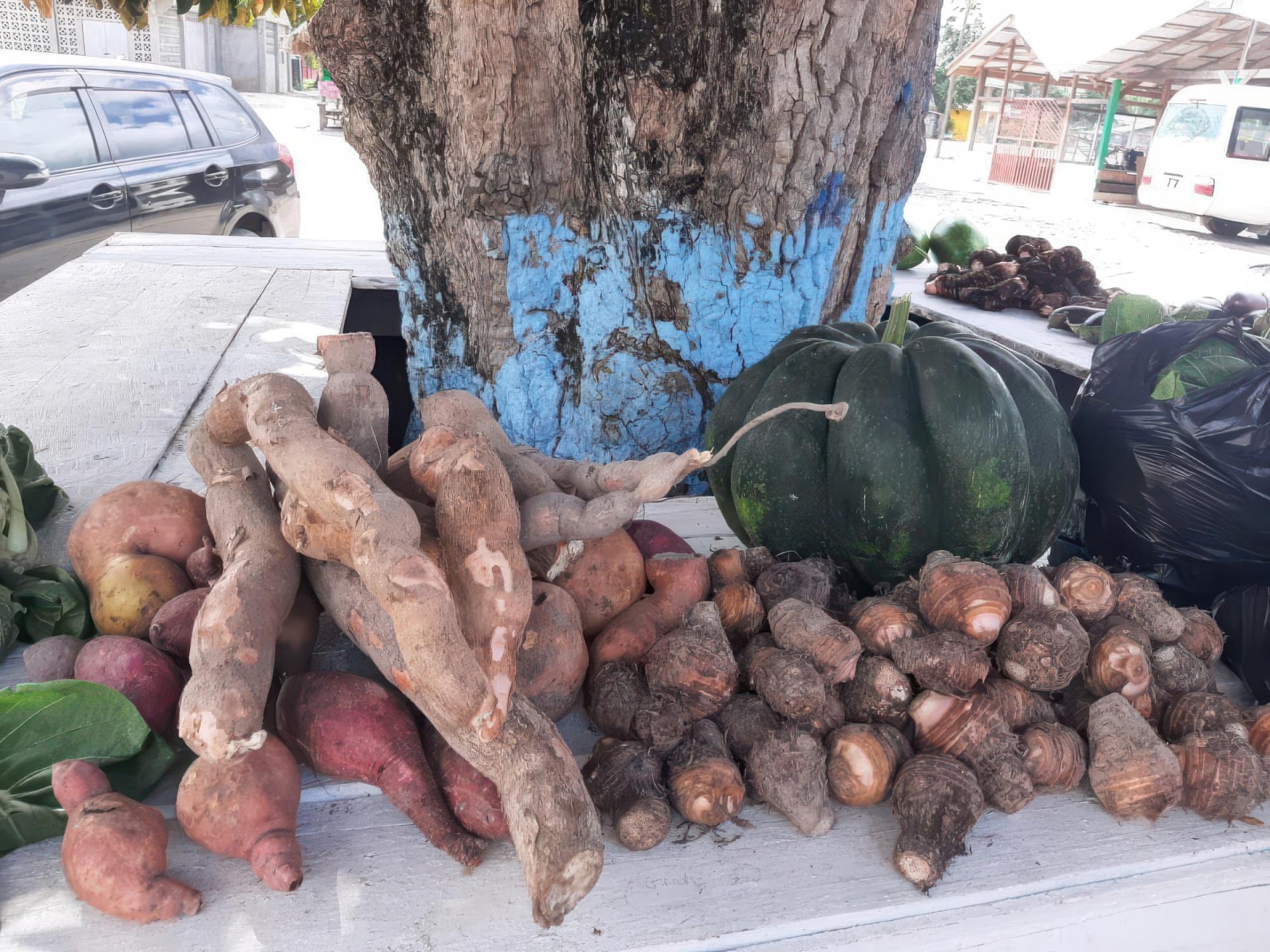
Una escena de un mercado sabatino, donde agricultoras y agricultores de Pakuri exhiben y venden raíces, tubérculos, verduras y frutas.
Este trabajo forma parte de un estudio de caso más amplio, de base comunitaria, desarrollado a través del Programa de Diploma del Foro Internacional de Mujeres Indígenas (Diploma Program of the International Indigenous Women’s Forum), cuyo marco y orientación ayudaron a crear un espacio seguro para los testimonios y el conocimiento de las mujeres que están en el corazón de esta historia.
Para tender puentes entre generaciones, las mujeres de Pakuri están dando forma a Wai Hiyaro Kalata, que se traduce como “Nosotras las mujeres sanamos”. Es un círculo de mujeres, concebido como un programa piloto de cinco meses liderado por la tía Wendy, que reunirá a las generaciones para sembrar, tejer, compartir medicinas y contar historias abiertamente. Será un espacio seguro, culturalmente arraigado, donde mujeres y niñas puedan compartir testimonios y experiencias de vida, re-aprender oficios y habilidades tradicionales de agricultura, y reconectarse con la tierra y entre sí. La visión es sostener estos encuentros más allá del piloto, creando círculos de mentoría, revitalizando la lengua y tejiendo la solidaridad intergeneracional en la vida cotidiana.
Pero iniciativas así requieren recursos. Entre 2022 y 2024, Guyana obtuvo alrededor de 237.5 millones de dólares estadounidenses por su acuerdo de créditos de carbono forestal con Hess Corporation. Sin embargo, pese a las consultas que establecieron que el 15 % de los ingresos por carbono forestal se asignara al desarrollo Indígena liderado por las aldeas, muchas mujeres Indígenas y sus iniciativas culturales siguen recibiendo un financiamiento insuficiente. Si los bosques aún se mantienen en pie, es porque estas mujeres, trabajando con conocimiento sagrado y con las manos en la tierra, los han protegido. Es justo que una parte significativa de esos fondos se dirija específicamente a las iniciativas culturales y de bienestar de las mujeres, porque son precisamente ellas quienes, con su cuidado, sostienen la biodiversidad y la resiliencia climática.
Los testimonios reunidos en Pakuri revelan una verdad compleja: el silencio puede ser a la vez escudo y herida, y la resiliencia puede ser a la vez fortaleza y trabajo invisible. Y las mujeres, ya sea a través de la oración, el pan, el tejido o el testimonio, son las guardianas de la continuidad.
Las voces de Pakuri nos recuerdan que estos temas no son ideales abstractos. Están vivos en el trabajo cotidiano de las mujeres Indígenas: en los campos de yuca, en los círculos de tejido, en los silencios que guardan a la vez duelo y fuerza. Reavivar las rutas de parentesco significa más que recordar el pasado; implica construir puentes entre generaciones para que el futuro se alimente con dignidad y cuidado. La soberanía alimentaria no es solo una demanda política, sino una realidad vivida que comienza en las manos de las mujeres, arraigada en la reciprocidad y el amor.
Por eso las palabras de las mujeres deben ser llevadas hacia adelante. Nos enseñan que el camino hacia la soberanía alimentaria pasa por el parentesco, la tierra y el cuidado. Nos recuerdan que la cultura no es algo abstracto, sino algo extendido finamente en el pan de yuca, trenzado en las canastas, susurrado al oído de las nietas al caer la tarde. Si escuchamos con atención, oiremos la verdad que siempre ha estado ahí: las mujeres Indígenas han sostenido la tierra, los bosques y la cultura, a menudo en silencio, a menudo sin reconocimiento. Sus voces no son nuevas; siempre han estado hablando. Lo nuevo es si, al fin, elegimos escuchar.
En Pakuri, la yuca no es solo un cultivo. Es parentesco. Es soberanía. Es una oración que llevan las mujeres en sus manos, un hilo vivo que une el pasado con el futuro. Y mientras se siga sembrando, rallando y horneando, la voz del pueblo Lokono perdurará.
Sabantho Aderi Corrie-Edghill (Lokono) es una mujer Indígena urbana, hija de Pakuri (Guyana), nacida en Barbados y residente en Suecia. Ella es investigadora intercultural, proveedora de datos Indígenas, educadora de apoyo y autora de literatura infantil, y se desempeña como representante de la Organización Caribeña para el Desarrollo Amerindio.
Foto Arriba: Círculo de mujeres pelando y rallando yuca. Este es un proyecto de agroestabilidad que involucra aproximadamente a 30 habitantes de la comunidad. Foto de Indigenous Guyana.